

By Leah Downey, PHDesign Manager
School pride, at least in the traditional sense, is not as trendy with students as it used to be. Decking out a space with mascots, logos and school colors is not a priority for most kids.
This shift is far from universal. There are still several school communities, including the students, that embrace the school spirit design style. However, for those that don’t, there are still opportunities to celebrate the community in a different way.
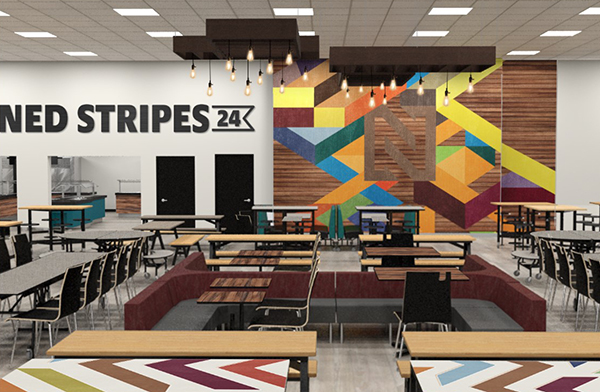
Looking Outside
No school exists in isolation. One way that a cafeteria can expand the definition of “school pride” beyond mascots is by searching for inspiration out in the community. From the smallest farm towns to the densest cities, every area has a story to tell.
Looking to the past can be great way to inform a cafeteria design. A previous school space that Palmer Hamilton worked on was in a district with a connection to the moon landing. The final design included several subtle references to that unique bit of history, including textures in the graphics that imitated the surface of the moon and a space-inspired color scheme.
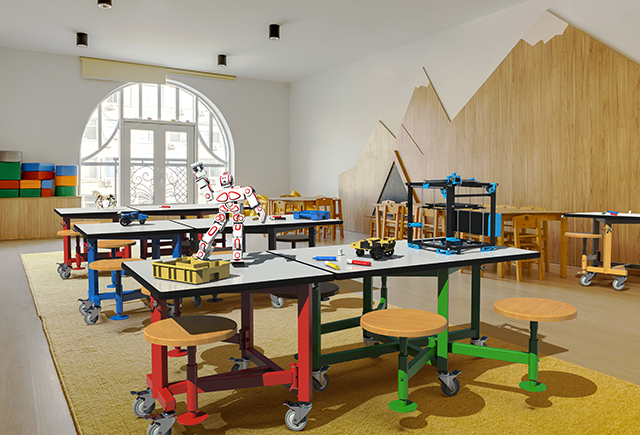
Natural elements from the region can be another great inspiration. Schools in mountainous areas can incorporate rock textures and silhouettes of ranges into the design, while schools near the coast can include waves and bright colors. The easiest way to bring nature into the space is with an emphasis on windows and natural lighting. Even if windows are limited, intentionally arranging furniture and decals can draw students’ attention to them and bring the outside in.
Incorporating local culture, traditions and monuments into the design can also help students feel connected to the broader community. Industries, too, can inform themes of the space. For example, schools in agricultural communities have often incorporated images of fresh produce. Not only does this celebrate a unique element of where the students live, it also expresses pride that much of what is served on the lunch line came from local businesses.
Looking Inside
Design can additionally be used to express pride in the space itself and what it offers to the school. Food service directors work hard to provide healthy, delicious meals to hundreds of kids. They are often developing innovative initiatives and new menu items to keep the offerings exciting and ensure students are well fed. Both the design and layout of the cafeteria can be used to support the functionality of the space and enhance user experience for both students and staff.
In addition to celebrating agricultural communities, depicting fresh ingredients in the design can reinforce the nutrition that students have access to in the space. It is also a way to express the variety of options available to students and get them excited about what they will be eating.
On the more practical side, understanding the food service initiatives is also important for optimizing furniture layout. Many programs have found success in a self-service model where students are given more freedom to make choices for their meal. Foods like build-your-own burrito bowls and salad bars are common examples. If this, or any other style of service, is a priority for schools, the placement of the furniture can be done in a way that best supports changes in traffic flow, graphics can be added for any necessary explanation, or any other unique solution can be incorporated to best support the experience.

Looking Good
Just because the school fight song isn’t printed above the serving line does not mean that the cafeteria cannot be a celebration of the community. Designing a space that is authentic, inclusive and truly unique to the people it serves can come from many inspirations.
This is why Palmer Hamilton takes a full-service approach to design and prioritizes meeting with multiple stakeholders. The better we know a school community, the better we can represent it in the final space design and the more everyone will feel pride in their cafeteria.