
School space design looks straightforward until the renovation is done, the furniture is in, and nobody sits in it. That is the real failure mode, and it is more common than most facilities directors want to admit.
That gap between imagined use and actual use is the lounge problem. And it shows up in common areas, libraries, student unions, and campus waiting spaces across the country. The furniture gets specified for the floor plan, not for the people. Fixed rows, static configurations, and pieces that cannot be moved without a facilities work order. The room gets locked into one layout from the day it opens, and that layout serves some students on some days and nobody on most others.
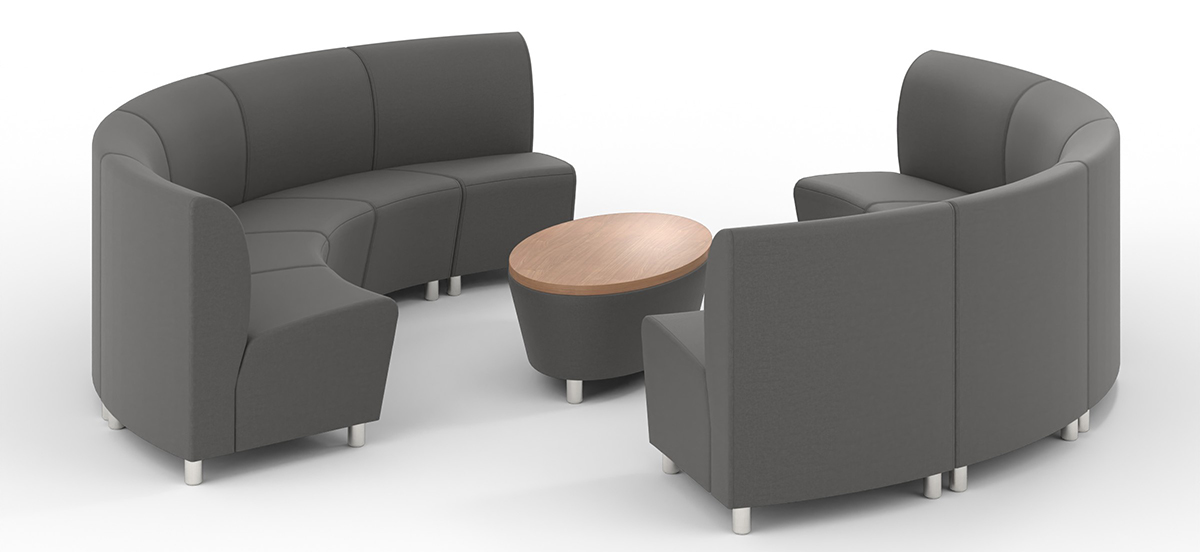
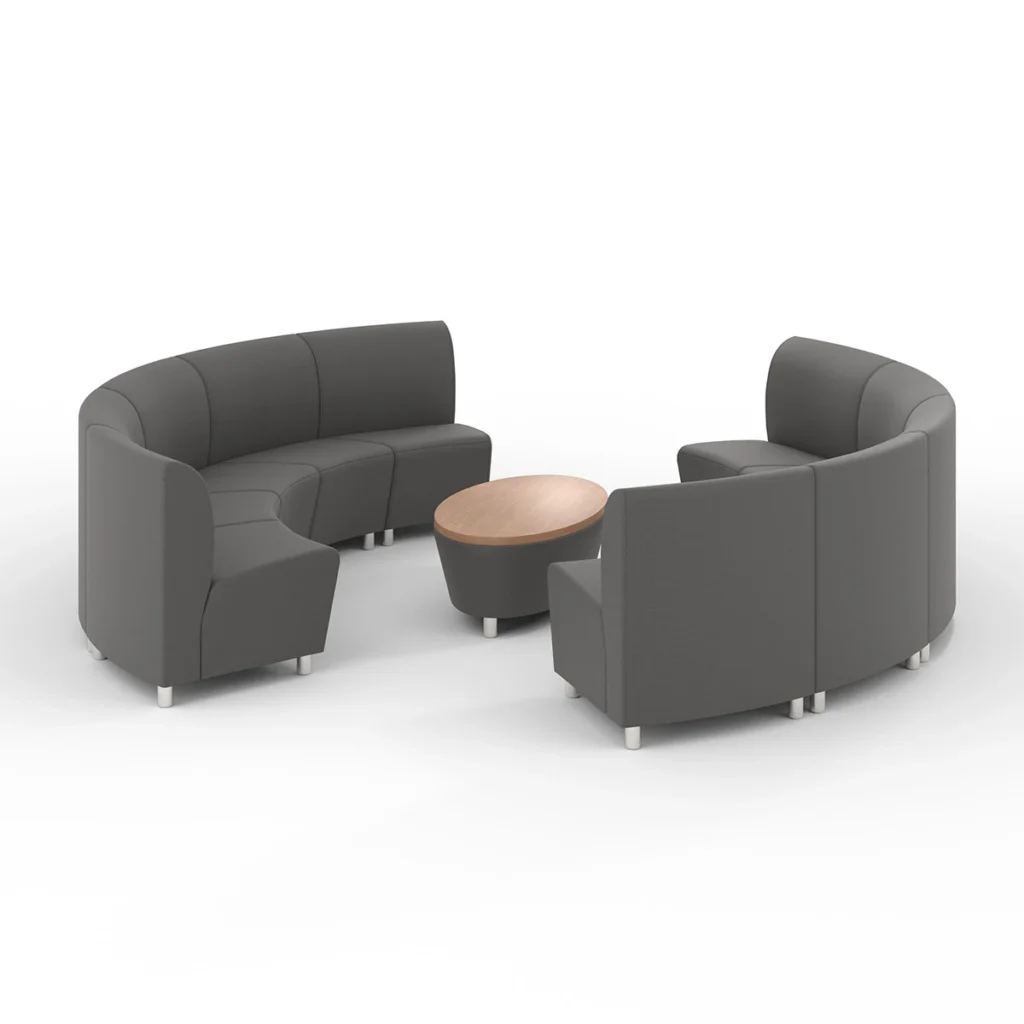
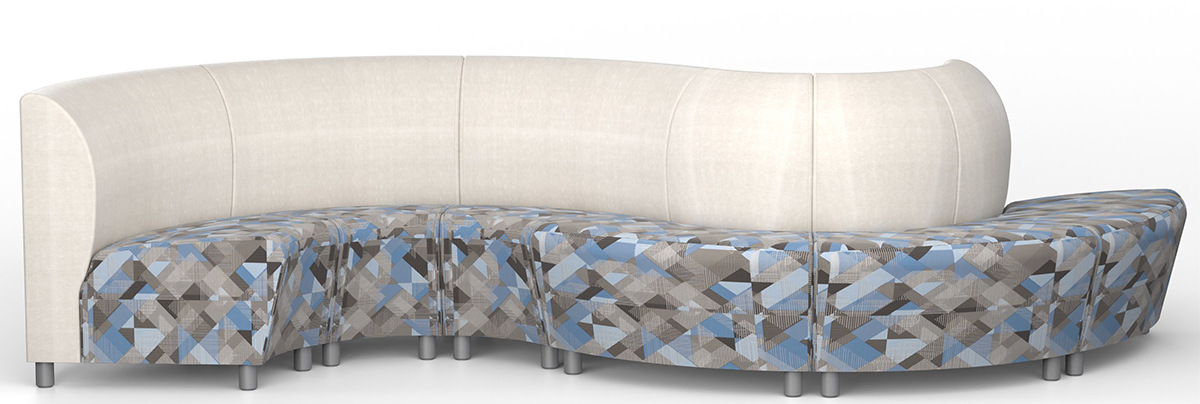
The Haywood modular lounge seating collection from Palmer Hamilton was built as a direct answer to that problem. The system starts with a deceptively simple idea: give the room the ability to be different things on different days. Straight chair sections connect with 22.5 degree and 45 degree curved pieces in any sequence. Pie-shaped end caps close off a cluster. Coordinating ottomans and occasional tables in round, square, and oval shapes drop into the configuration wherever the layout calls for them. The result is not a sofa. It is not a cluster of chairs. It is a system that follows the room instead of forcing the room to follow it.
What makes Haywood work in institutional settings is something most institutional furniture gets wrong from the start: it is genuinely comfortable. Not tolerable. Not acceptable for a waiting area. Comfortable enough that sitting in it is a reason to stay rather than a reason to find somewhere else. Most school common areas are filled with seating that is hard, flat, and designed to survive abuse rather than invite use. Students feel that immediately and vote with their feet. Haywood is built differently. Seat cushions sit on 8 gauge no sag sinuous springs under 4 inches of high density polyurethane foam. Back cushions use 11 gauge springs under 2 inches of foam. The frames are puzzle-cut 7/8 inch plywood with finger joints. The result is a piece that absorbs daily use by hundreds of students over the life of a building and still feels like somewhere worth sitting. These are not lounge chairs designed for a hotel lobby with a three-year replacement cycle, and they are not the institutional furniture that sends students to the floor within five minutes of the room opening.
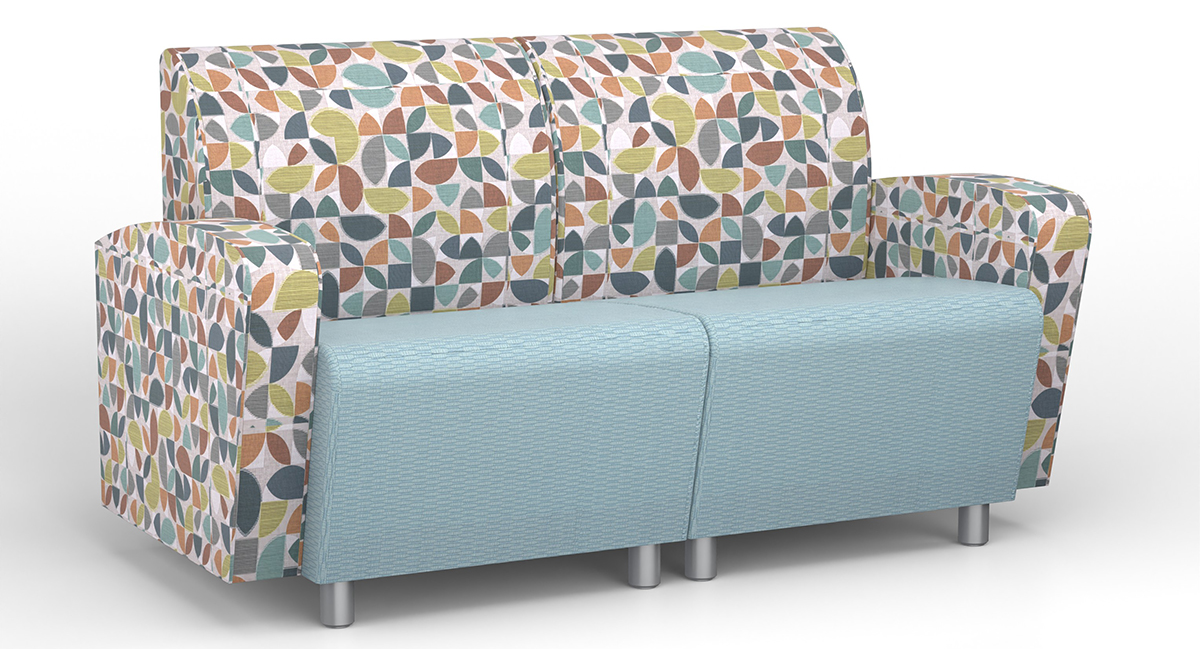
The customization range matters too, and not just for aesthetics. Haywood offers more than 50 standard fabric options from Grade 2 through Grade 10, with hundreds of designer fabrics available. Contrasting fabric combinations can be specified independently for the base, seat, back, and arms. For design teams working with a school’s brand colors or a campus identity system, that level of control closes the gap between the furniture catalog and the actual design vision. Customer Own Material is accepted with prior approval for specifications that require something specific.
For spaces where students need to work and charge devices while they sit, optional integrated power units mount to the arm front or seat side and provide one tamper-resistant AC outlet, one USB-A port, and one USB-C port on a 10 foot cord. The faceplate is powder-coated in black or white with color-matched receptacles. It disappears into the piece rather than looking like an afterthought.
What makes Haywood work in institutional settings is something most institutional furniture gets wrong from the start: it is genuinely comfortable. Not tolerable. Not acceptable for a waiting area. Comfortable enough that sitting in it is a reason to stay rather than a reason to find somewhere else. Most school common areas are filled with seating that is hard, flat, and designed to survive abuse rather than invite use. Students feel that immediately and vote with their feet. Haywood is built differently. Seat cushions sit on 8 gauge no sag sinuous springs under 4 inches of high density polyurethane foam. Back cushions use 11 gauge springs under 2 inches of foam. Arm pads add a quarter inch layer of high density foam so there is no hard edge anywhere a student rests. The frames are puzzle-cut 7/8 inch plywood with finger joints. The result is a piece that absorbs daily use by hundreds of students over the life of a building and still feels like somewhere worth sitting. These are not lounge chairs designed for a hotel lobby with a three-year replacement cycle, and they are not the institutional furniture that sends students to the floor within five minutes of the room opening.