American Library Association Annual Conference & Exhibition
June 25 – 29 • McCormick Place, Chicago
Shape what’s next for your library!
ALA’s 150th Anniversary conference—the largest library event in the world—bringing together thousands of library professionals to celebrate, learn, and shape the future of libraries through keynotes, sessions, and a major exhibition. See us in Booth 1445.

Texas Annual School Nutrition Show
June 28 – 30 • Grapevine, TX
IGNITE THE LIGHT
Texas’s premier school nutrition event connecting foodservice professionals, directors, and industry vendors for professional development, peer networking, and showcasing the latest products and innovations for Texas school meal programs. Visit us in Booth 101.

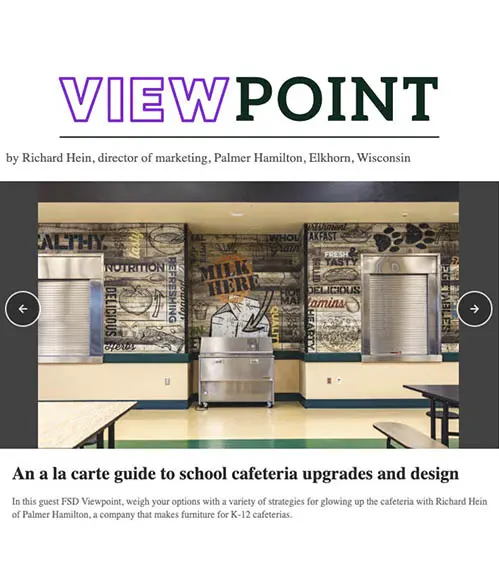
FoodService Director article
Our article in FoodService Director is live online.
In this guest FSD Viewpoint, weigh your options with a variety of strategies for glowing up the cafeteria with Richard Hein of Palmer Hamilton, a company that makes furniture for K-12 cafeterias.
Read it here: https://www.foodservicedirector.com/k-12-schools/an-a-la-carte-guide-to-school-cafeteria-upgrades
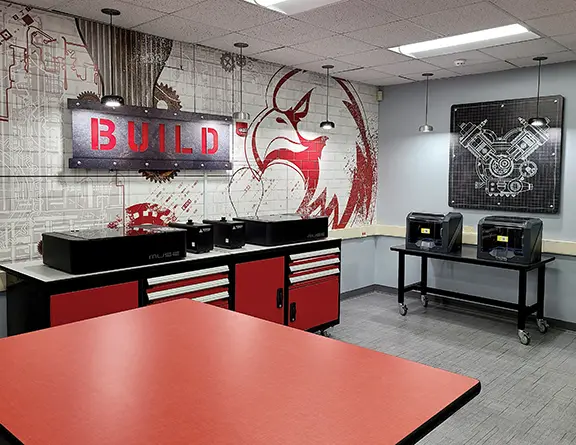
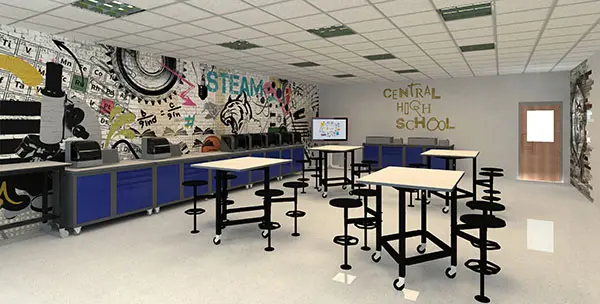
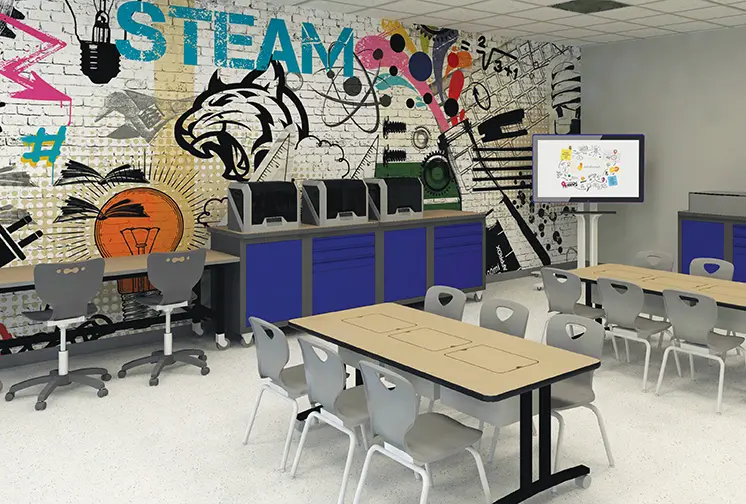
Taking the Guessing out of Makerspaces
The thought of including a makerspace can be intimidating. You know you should have one in your school, but where do you start?
A successful makerspace needs to start and end with essential steps. By following these steps, a school can feel confident that their makerspace has been designed and built to fit their needs exactly.
PHabLab starts with an in-depth conversation about the goals a school has for the space. Some don’t know their goals other than to have a lab. Through this initial counseling, clients learn about the details, inclusions, timeline and finished space that would be ideal for them. This goal setting is an essential first step in the process, and a school needs the experience of a partner who understands, practices and excels at this.
Once that goal is established, the school is presented with a design book that includes the detailed plan and cost. This valuable resource not only consolidates all the information, but it can also be used for grant proposals and board presentations. Palmer Hamilton serves as a resource and a subject matter expert for the school, supporting them in presentations, answering questions and making the process clear to interested parties.
These steps are essential for accurate lab design, creation and usage. PHabLab guides a client through these steps, educating them at each step of the process.
Once the contract is signed, the order is filled – with every element of the PHabLab tailored for that school. From the devices to furniture and even the school-specific art on the walls, everything is being created for that school’s PHabLab.
There are a lot of pieces that are included in a PHabLab and many schools worry that installation will take too long and interfere with their schedule. PHabLab installs the custom labs over two days so they don’t have to miss a beat. School departments that need to function with the new lab have already been working with PHabLab, ensuring connectivity and operation as soon as it’s installed.
PHabLab experts arrive on-site for a thorough two-day orientation on the usage of digital fabrication tools and software, preparing school personnel to be effective makerspace teachers. This support continues for a year after installation where additional professional development is available, as well the ability to bring on student certifications through NC3. Another way to jump-start PHabLab is by utilizing the makerspace curriculum, INVENTORCLOUD. This comprehensive platform helps teachers facilitate all the lessons and projects students need to succeed in this space.
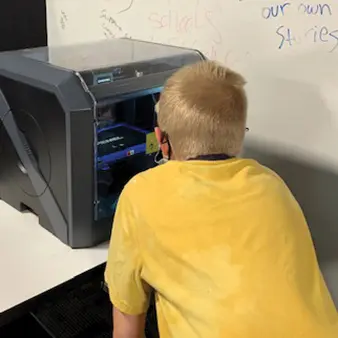
One recent client in California, the San Jacinto Unified School District, went through these steps with PHabLab and their learning lab is now being used by hundreds of students. They say that the counseling, expertise and finished product exceeded their expectations. To hear learn more about this successful partnership, watch the video and listen to the educators in their own words.
Northwestern School District
OPPORTUNITY
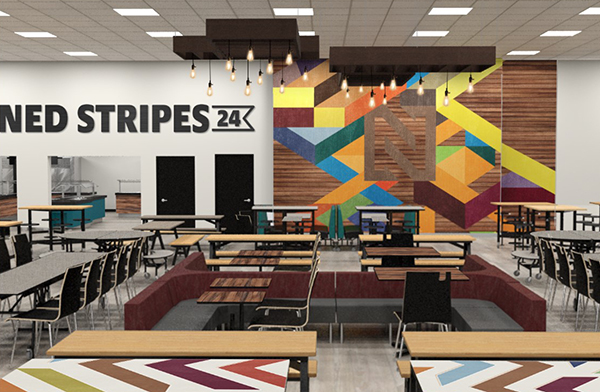
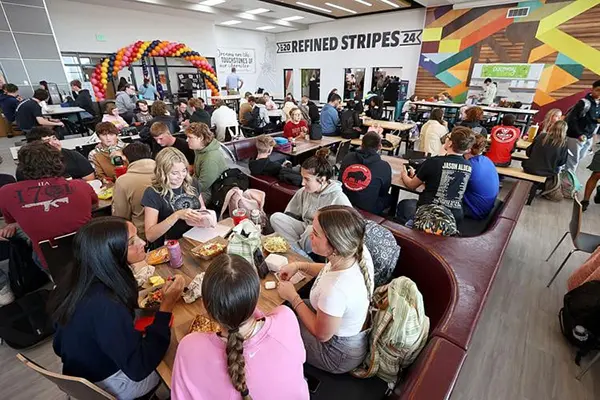
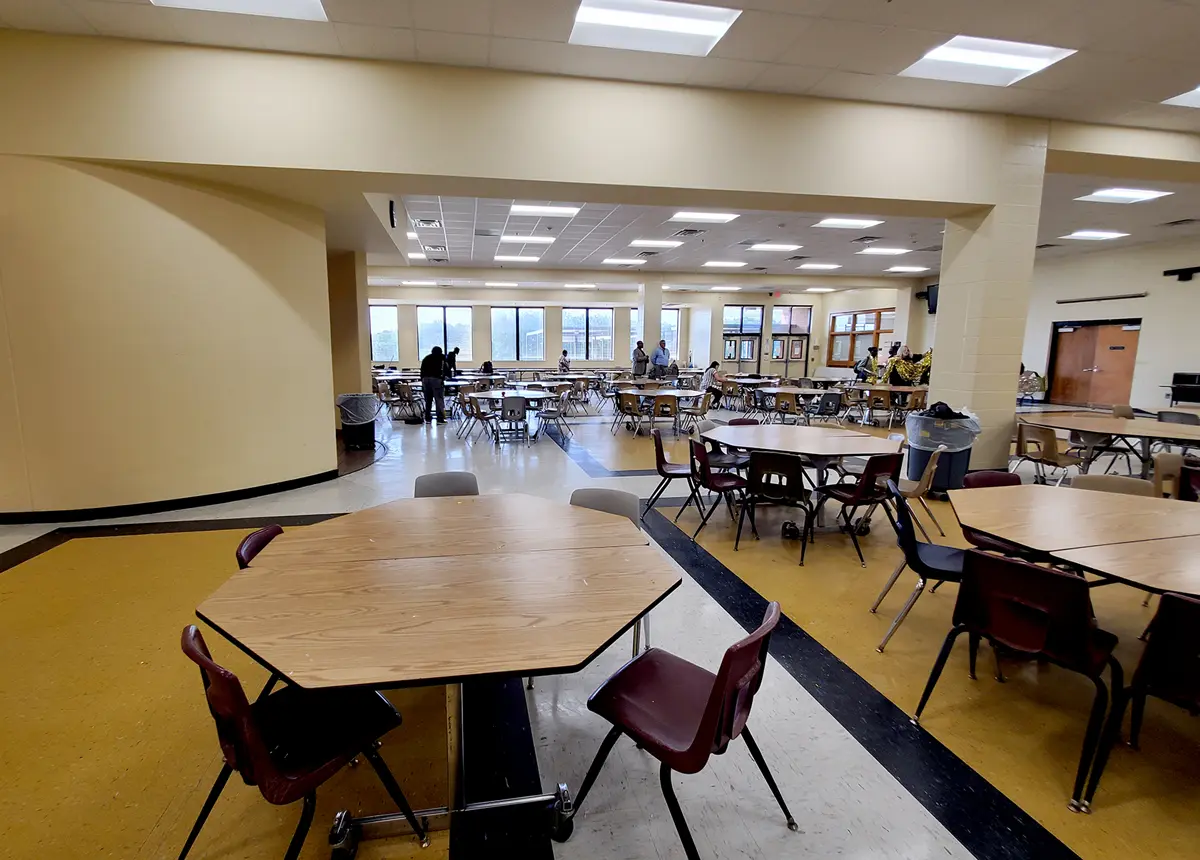
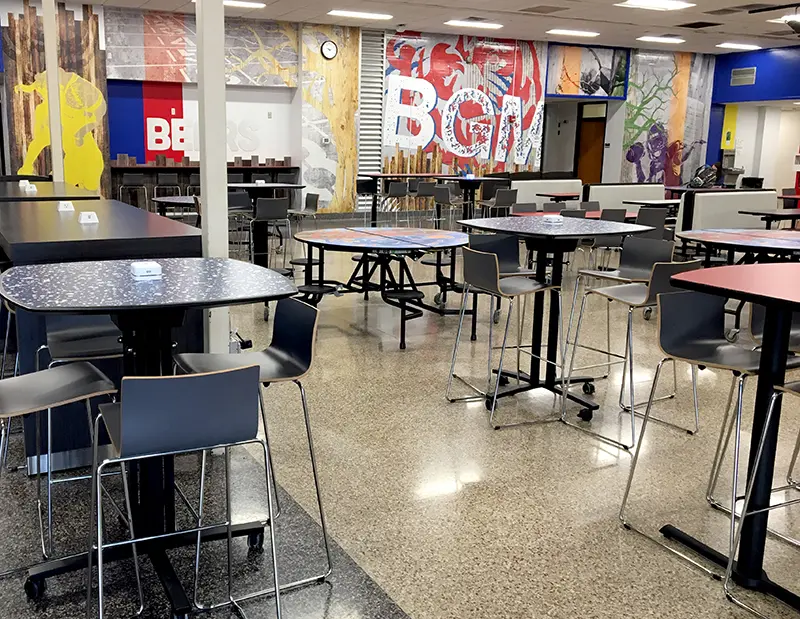
The renovation largely involved giving the space a more open feel. Remnants from a time when the cafeteria doubled as an auditorium (small windows, white-grey color scheme and tiered steps) were still present, crowding the room and detracting from the students’ experience. Palmer Hamilton’s design concept needed to support the architectural changes to these features by promoting a modern, open look and taking advantage of the increased natural lighting.
SOLUTION
Palmer Hamilton’s design team effectively worked with the architects to harmoniously deliver a space that exceeded student expectations. Elements of the design included natural wood finishes, a variety of seating options, additional lunch lines and soft lighting that all work well with the openness of the new space. The new design is intentionally limited in school colors, which principal Tim Shoaff said was done to “give them a space at school that doesn’t feel like school.” And students agree. Comments on the new space have made a clear improvement from “institutional” in the initial survey to “elegant,” “bougie,” and “Starbucks-like.”
Photos of opening day courtesy of Kokomo Tribune.
Download the PDFPalmer Hamilton Launches Design Service for Esports Spaces in K-12 Schools
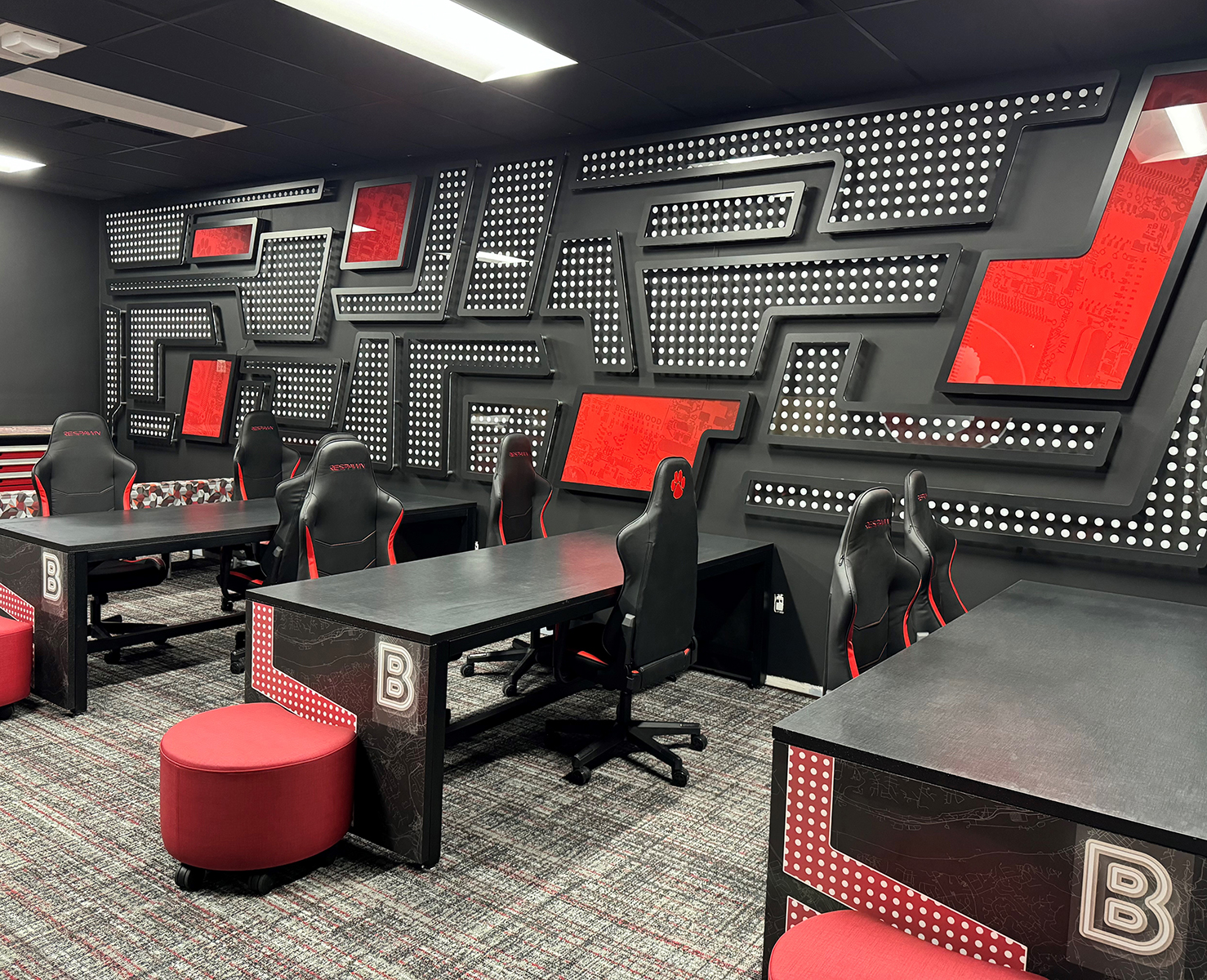
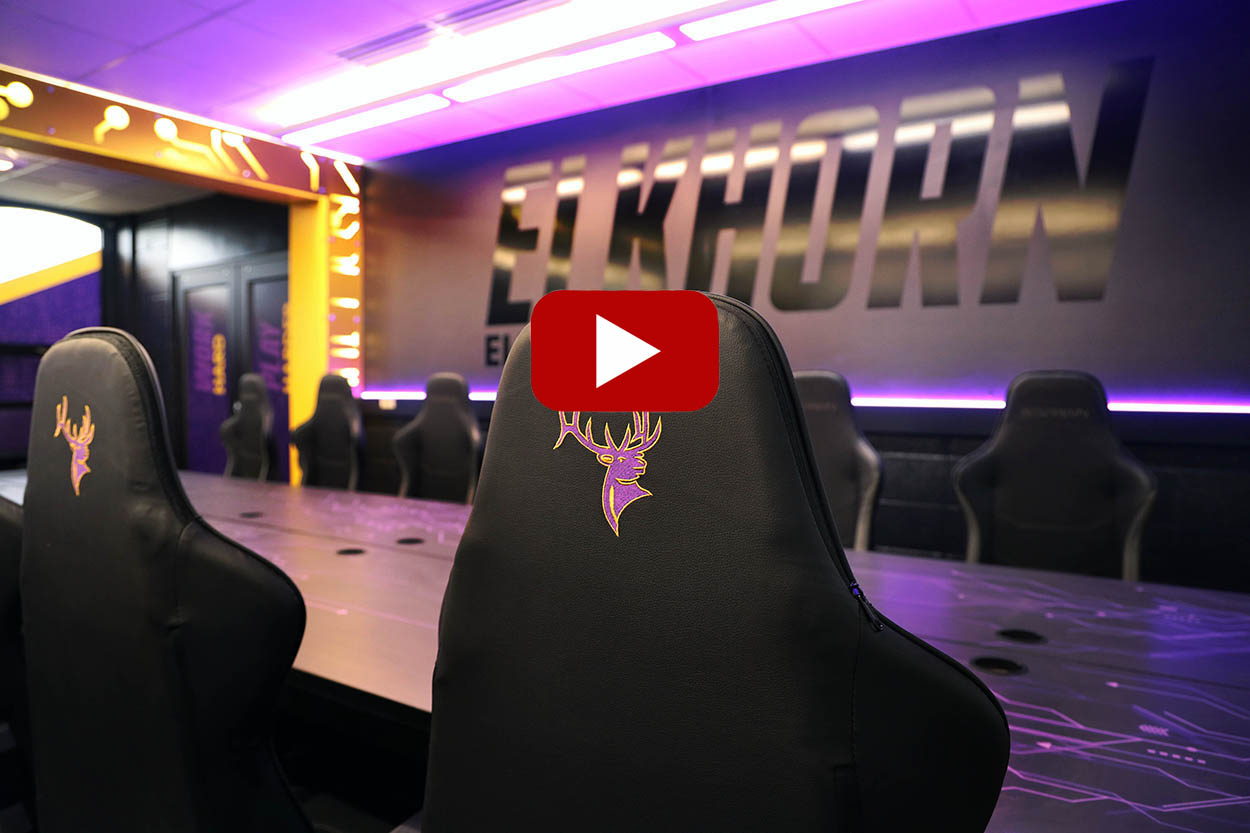
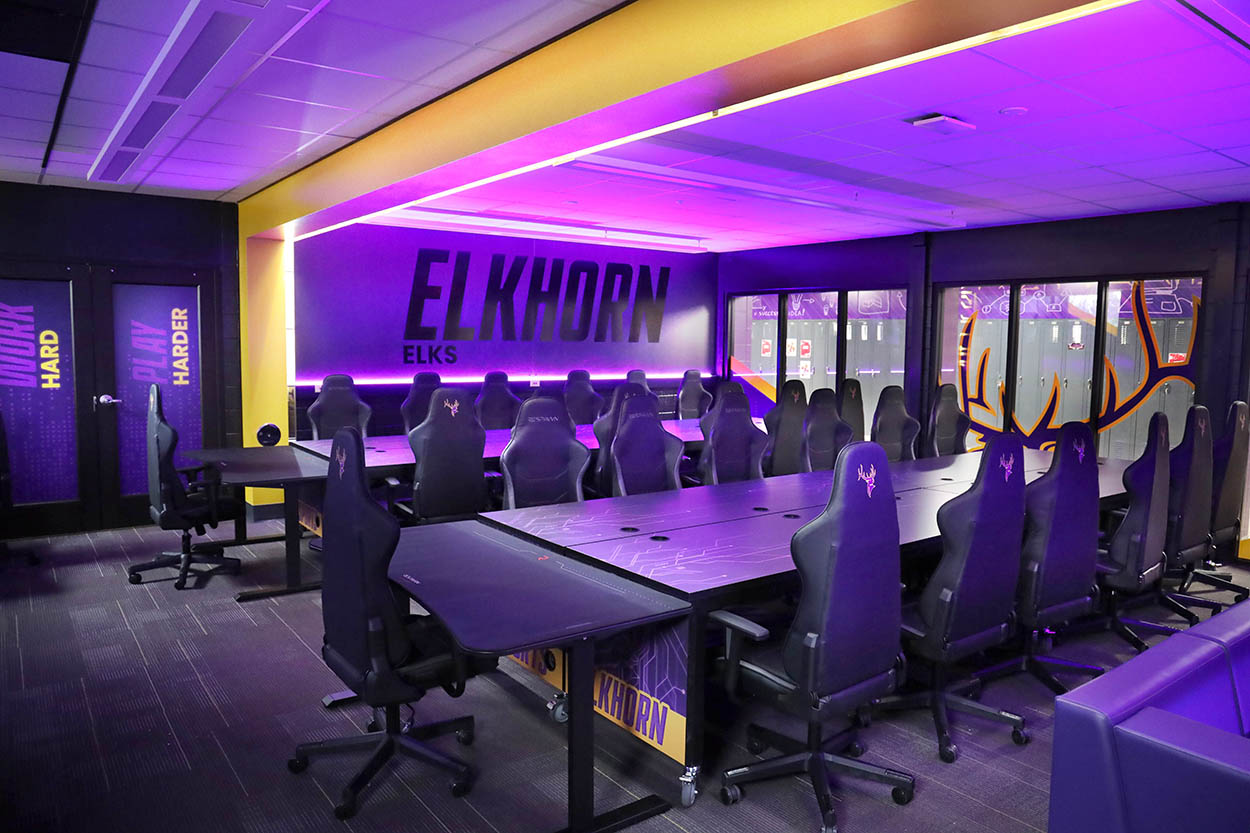
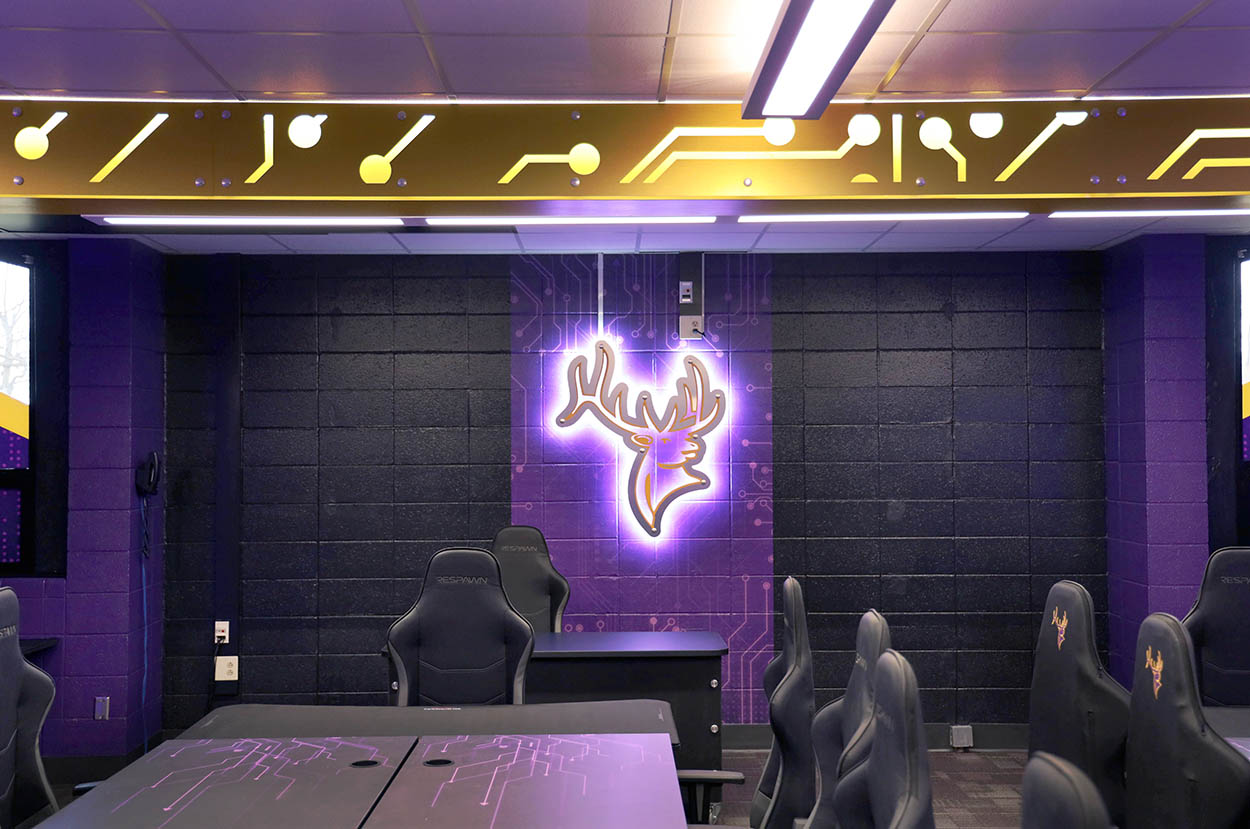
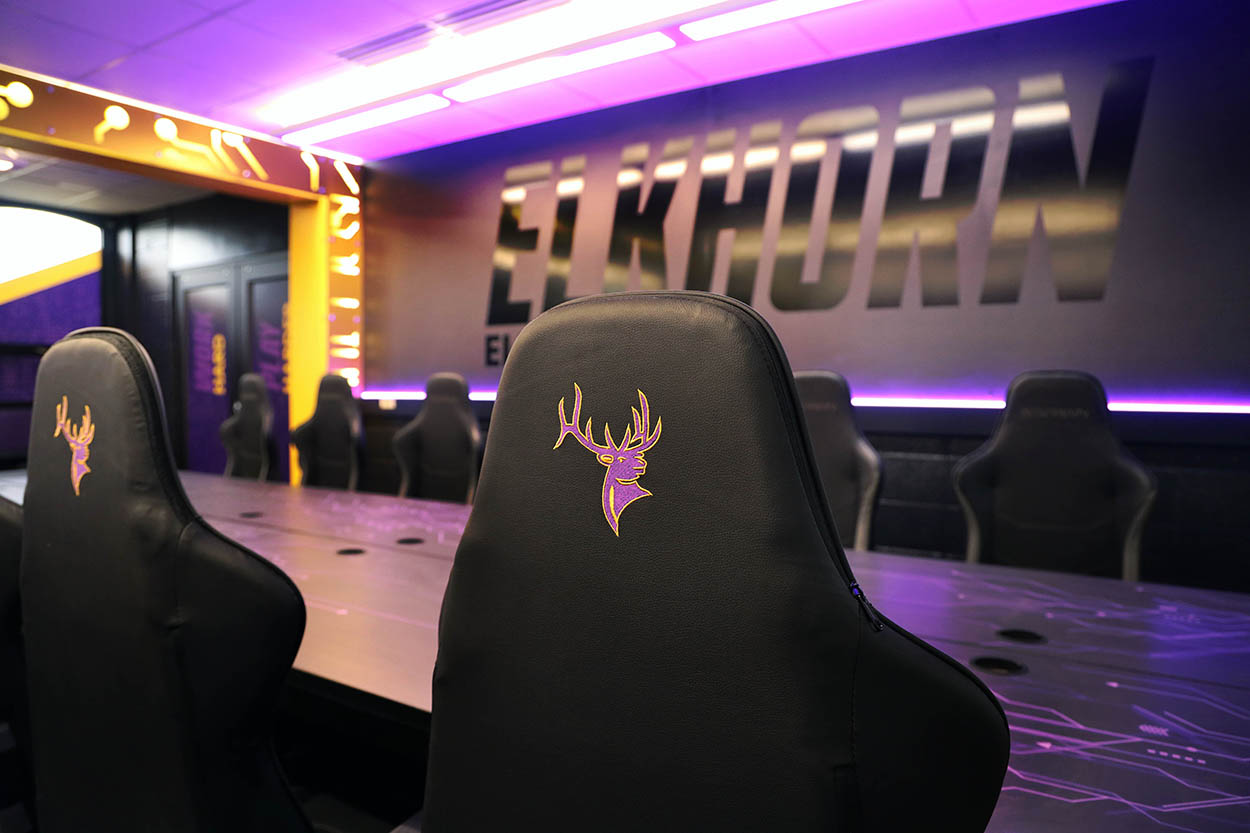
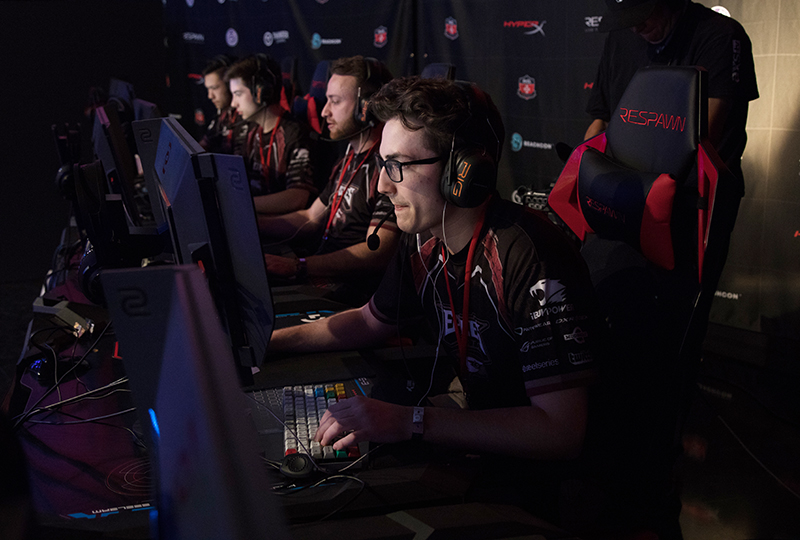
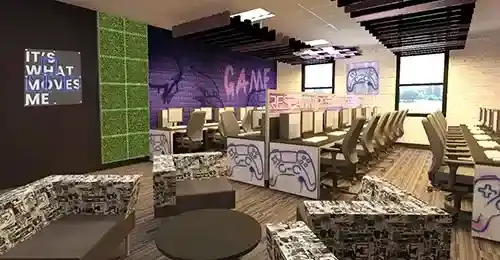
Palmer Hamilton, a full-service provider of turnkey furniture and design solutions specializing in K-12, has added esports spaces as an offering for schools featuring gaming chairs and desks designed by RESPAWN, a manufacturer of furniture designed for gaming.
Esports, or competitive video gaming, has had a growing presence as a team sport at the professional, college and now middle and high school levels. Esports’ popularity can be attributed to its appeal to a population of students who are not drawn to traditional extracurricular activities.
“We have found in our work with RESPAWN that most of the students who join an esports team do not participate in any other team activities,” says Palmer Hamilton CEO John Gardner. “Not only does an esports space allow these kids to find a community within the school, but the encouragement and development of an official program can help many of them find lifelong careers in the gaming industry.”
By incorporating the multiple lines of gaming chairs and desks offered by RESPAWN, Palmer Hamilton designers can expand their offerings to accommodate the growing demand for esports programs and spaces in K-12. Spaces incorporating new esports products and design services can be independent or incorporated into a new or existing STEM/STEAM lab.
Schools working with Palmer Hamilton on these and any other spaces are encouraged to involve key stakeholders, including faculty, staff and students, in the design of the project to create a space that reflects the unique character of the community. In addition to the new esports capabilities, Palmer Hamilton designers can work with schools to enhance cafeterias, media centers, STEM/STEAM labs and other common areas.
See our Esports Environments section for more information.
Making Room for Esports in Schools
At Palmer Hamilton, we strive to provide quality furniture and décor solutions that help K-12 schools do more with their space. Our true mission, however, is to deliver environments that encourage collaboration and give every student a place where they feel welcomed and supported.
This mission was the driving factor in developing Palmer Hamilton’s new partnership with RESPAWN, a supplier of high-quality furniture for esports. The esports industry has grown exponentially over the past few decades, and its influence has had an impact on K-12 schools with many schools adding video games as learning tools in curriculum and offering competitive esports teams as an extracurricular opportunity for students. As this presence continues to grow, having a dedicated space for esports can ensure that a new demographic of students finds a home within the school and resources they can use to find future success in a growing industry
Inclusion for Today
A 2019 survey taken by the Aspen Institute for Project Play, a non-profit that works to develop healthy communities through sports, found that in 2018 only 38 percent of kids ages 6 to 12 played a team sport on a regular basis with the average child quitting sports entirely by age 11.1 Esports players see even lower participation rates in sports. Through its work with the Wisconsin High School Esports Association (WIHSEA), RESPAWN has found that 80 percent or more of the members in most esports programs do not participate in another team activity.
For the majority of these kids, esports are a chance to reap the social, mental and emotional health benefits of being on a team that they would not traditionally find. According to Health.gov, these benefits can include lower rates of anxiety and depression, higher cognitive function and even a reduced risk of suicide.2 This makes driving participation and supporting those who are already involved in esports an important responsibility for school administrations.
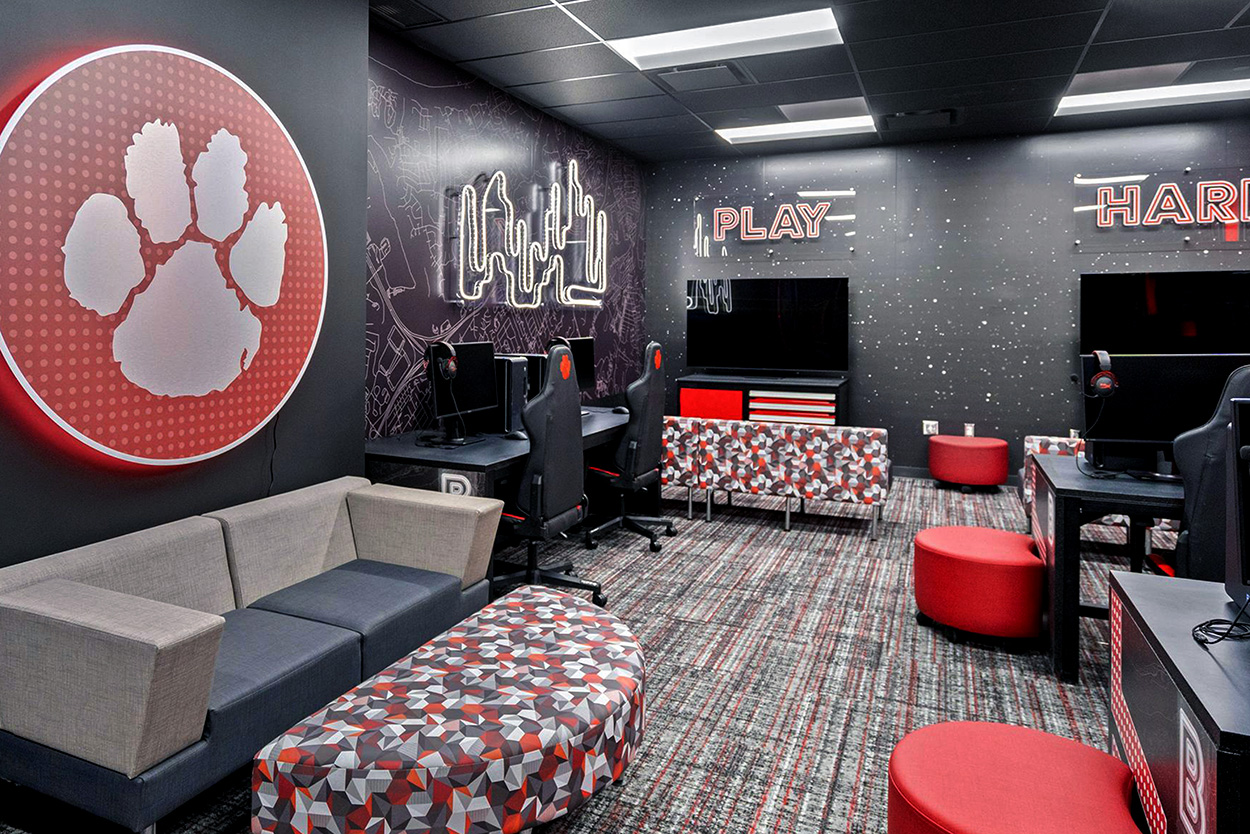
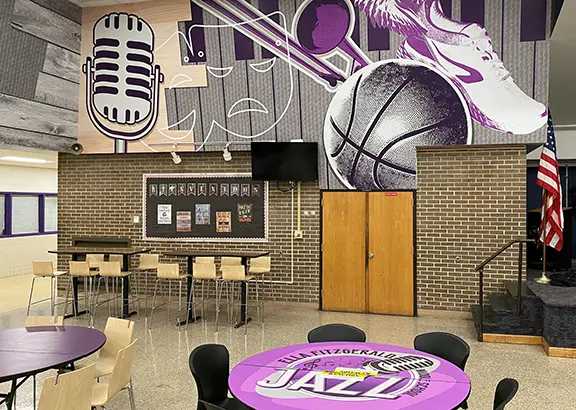
Getting students excited about esports starts with creating the right environment. A basketball program would not thrive if the playing space consisted of an outdoor, concrete court with a portable hoop. Players want a proper court with team colors on the walls, equipment they are excited to use every day and school pride exhibited throughout the space.
Esports is the same.
Many students who would be interested in joining an esports team likely already have a setup at home. Schools that develop an esports space with companies like Palmer Hamilton and RESPAWN offer replicated or even elevated performance spaces to invite student participation. School imagery can also be incorporated throughout the space to foster the pride and belonging that come with participating in an organized team activity for kids who may not always see themselves as representatives of their school’s spirit.
As schools embark on developing an esports space, Palmer Hamilton encourages them to consult with all stakeholders, including the students who will use it. Not only does this help them take further ownership of the space, but it also offers an opportunity for input from people who may want to get involved but are hesitant due to lack of representation. This is especially pertinent for young women. Though esports has become more even in the gender makeup, the population is still largely male dominated. Inviting women and students from other non-majority demographics to make their mark on the space from the beginning helps give everyone who wants to participate a welcoming environment.
Careers for Tomorrow
In many cases, the activities that kids participate in during their days in K-12 are much more than fun ways to pass the time. Thousands of former high school athletes are now playing professionally, coaching or finding other ways to turn their passion into a lifelong career.
An interest in esports opens the door to more career opportunities than almost any other school activity. Market Watch reported in 2021 that the video games industry grew to surpass the combined market share of both film and North American sports, and the jobs in this massive enterprise are both numerous and lucrative.3 Having the resources and support for students can help them find and build careers they are passionate about.
Esports spaces can also be part of a larger effort to encourage students in STEM/STEAM fields. Having a full room dedicated to esports in the school would be ideal but may not be viable with budget and space constraints. Instead, schools can work with brands that specialize in STEM/STEAM, such as PHabLab, to create multi-purpose spaces for both experiential learning and extracurricular activities. Either way, this makes participation in a variety of potential fields of learning, new extracurriculars and eventual career paths much more attractive and attainable for every student.
1: Survey: Kids quit most sports by age 11 – Project Play
Education Goes Both Ways
Richard Hein, Director of Marketing – Palmer Hamilton
No one knows an industry better than those who are in it every day, and we are lucky to work directly with some of the most experienced and well-versed professionals in education. Throughout our decades as a full-service furniture manufacturer, Palmer Hamilton has built up our own wealth of knowledge entirely thanks to these relationships with schools and dealers. For our part, we hope to provide the same value back to them as a trusted partner, and this two-way exchange of expertise is the cornerstone of our business model.
You Learn Something New Every Day

Cafeterias are the biggest rooms in a school with uses beyond the single purpose of feeding students
Our ongoing relationships with important industry contacts are crucial to keeping us up to date on the latest trends. Over time, we’ve learned the importance of flexibility in a space, especially in smaller schools. Cafeterias are one of the biggest rooms in a school, and many administrations feel they should have uses beyond the single purpose of feeding students. The right furniture and design can make the room multifunctional for meetings, community events and other purposes, extending the value that the room provides to the school. STEM/STEAM and esports spaces are seeing a similar trend, with many schools looking to combine multiple educational media into one space. This design style started in university settings but has since gained traction in high schools with an emphasis on multidisciplinary education.
Individual accounts also offer important insight on a more personal level. Each job is unique, and there are nuances to the community and the space that will influence the final design. Our designers take the time to meet with multiple stakeholders, including students, teachers, custodians, facility managers and IT. This approach ensures that every question is answered, input is gathered and the designers have a complete picture of what they’re working with.
School for Schools
Developing an effective method for getting the information we need involves a lot of learning from our past. We have always been thorough, but small details can slip through the cracks when not enough detail is given. Small details like outlets and planned upgrades can seem unimportant in the initial intake, but they can have an impact on the final design. Our design team is adaptable enough to navigate these forgotten factors when they pop up down the road, and they also ensure they never happen again. This leads to new questions for the stakeholders in future accounts to avoid facing the same obstacles going forward.
Ultimately, Palmer Hamilton is looking to solve a school’s problems, not create more. Schools in the market for a major cafeteria upgrade are generally looking for a solution for an objective. In many cases that’s driving up student participation or making a space more flexible, but we’ve encountered and assisted with many other goals as well. Understanding the “why” helps our designers be the best possible resource to help schools bring their vision to life.
Palmer Hamilton would not be successful today without the continued input from the schools and dealers we work with. We hope that they learn as much from us as we do from them and that they value the quality of our expertise as much as the quality of our products.
Key Benefits of Palmer Hamilton Contracts
Pamela Gannon, Contracts Manager – Palmer Hamilton
Given the significant volume of projects Palmer Hamilton undertakes each year and the demanding deadlines we navigate, prioritizing operational efficiency is essential. To improve our processes and enhance the overall experience for all stakeholders, Palmer Hamilton has secured standardized contracts. These agreements streamline purchasing across sectors such as education, healthcare and commercial enterprises, resulting in notable time savings by minimizing negotiation and approval times. Additionally, they reduce overall costs for end users through consistent terms, ensure clarity to minimize confusion and promote enhanced collaboration among stakeholders, ultimately leading to more successful project outcomes.

One major advantage is the standardized negotiation process, which simplifies the creation and implementation of contracts compared to managing individual project bids.
Despite these benefits, many organizations underutilize them due to a lack of awareness regarding their advantages and applications. Palmer Hamilton provides valuable insights into available options and demonstrates how contracts can benefit all stakeholders involved.
Type of Contracts
In addition to the broad advantages of a streamlined and cost-effective purchasing process, each type of contract presents its own unique benefits. Palmer Hamilton partners with a wide range of cooperative, regional and state contracts, each designed with distinct features to meet specific opportunities.
- Cooperative contracts allow various government agencies, schools and non-profits to buy goods and services together. This simplifies the purchasing process, saves time and money and often leads to better prices. It also allows organizations to access more suppliers without having to conduct individual bids.
- Regional contracts are agreements tailored to specific geographic areas, focusing on local needs and regulations. These contracts ensure adherence to local regulations and optimize the negotiation and approval process, enabling projects to initiate and complete more efficiently.
- State contracts provide pre-negotiated pricing suited for government entities. These contracts are especially advantageous for schools and other public sector organizations, as they minimize administrative burdens and enhance purchasing power.
Maximizing Value with Contracts
Our extensive experience with various contract types has highlighted several key trends that demonstrate their effectiveness. One major advantage is the standardized negotiation process, which simplifies the creation and implementation of contracts compared to managing individual project bids. This method reduces complexity and allows organizations to act quickly in meeting their needs.

Although the contracts are based on a standard framework, they can be customized to fit an organization’s specific requirements.
Although the contracts are based on a standard framework, they can be customized to fit an organization’s specific requirements. This adaptability enables tailored solutions that can respond to changing circumstances or unique project demands, ensuring that organizations remain flexible and competitive.
Furthermore, the efficiencies gained in procurement often lead to significant financial benefits. By consolidating purchases through these contracts, organizations can take advantage of bulk buying power, resulting in greater discounts for end users. As purchase volumes increase, pricing improves, leading to considerable cost savings over time. This strategic approach not only maximizes value but also strengthens relationships between organizations and their suppliers, enhancing overall business performance.
To learn more about Palmer Hamilton’s contract partners, visit www.palmerhamilton.com/purchasing-contracts/.
Making a Makerspace
Stephanie Hein, Program Director – PHabLAB
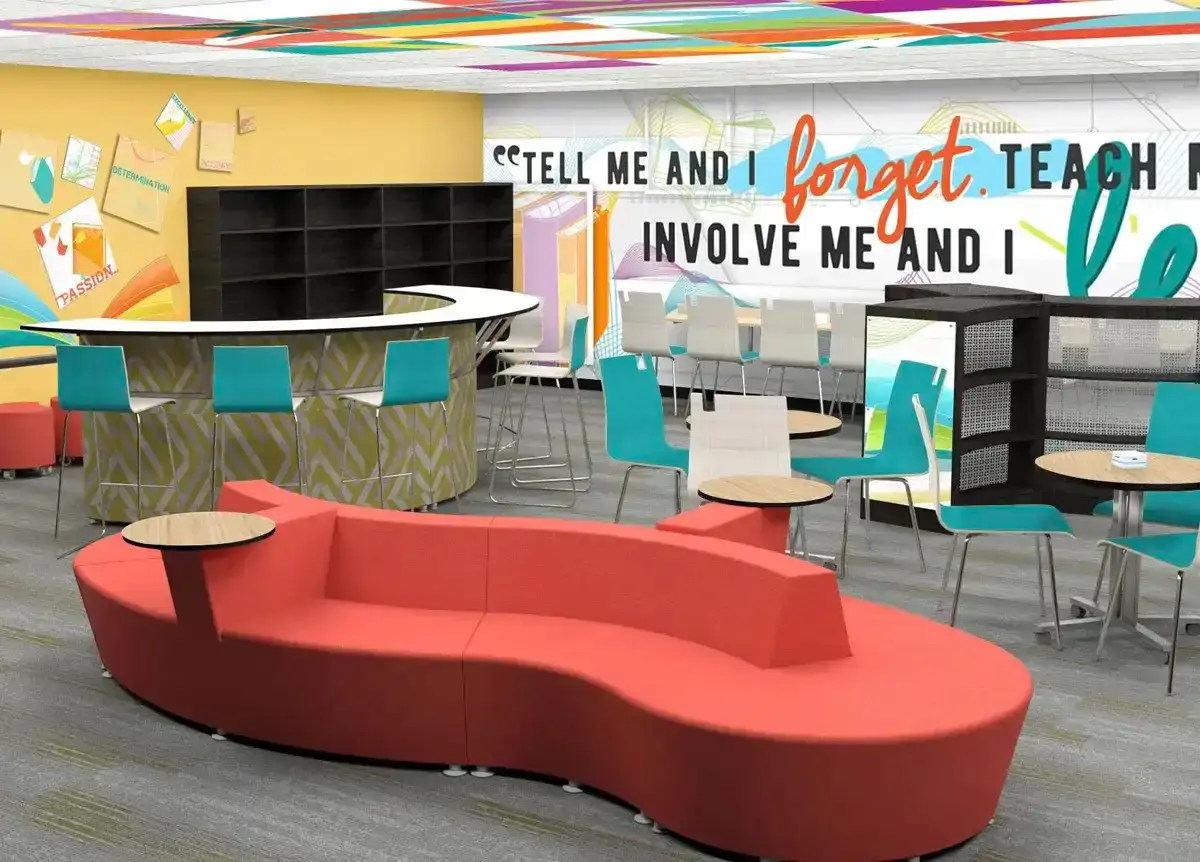
Non-traditional learning that emphasizes collaboration and hands-on experiences has steadily grown in popularity thanks to the many benefits it offers students and staff. Dedicated makerspaces within schools are an invaluable component of this kind of learning and offer a resource that can be shared by the entire community.
The unfamiliar design and technology in a makerspace can cause implementation to be a bit of a challenge for schools. However, by joining with a full-service space designer that focuses on making the space customizable, functional and sustainable, schools can be confident in its success.
Customizable
Building a customizable space starts with meeting schools where they are. In addition to typical considerations, such as the size of the school and age of the students, existing initiatives need to be taken into account as well. Some schools have already incorporated career and technical education (CTE) into their curriculum before they start building a designated space, and some are starting from square one. Where the school falls on that spectrum informs how robust the space’s capabilities and the team’s support need to be.
Understanding the school’s existing experiential learning offerings is also important in determining which machines to put in the makerspace. Vinyl cutters are often a good first step and a common hobby machine that educators may be familiar with. Laser cutters are similarly easy to use and efficient. Another popular and accessible choice is a 3D printer, but those can be a bit time-consuming for shorter class periods. Computer numerical control (CNC) machines are the most complex, but an entry-level version in a makerspace can help introduce students to the technology they will use in future CTE classes. Every school has a machine (or machines) that will best serve its needs and inform the design of the rest of the space.
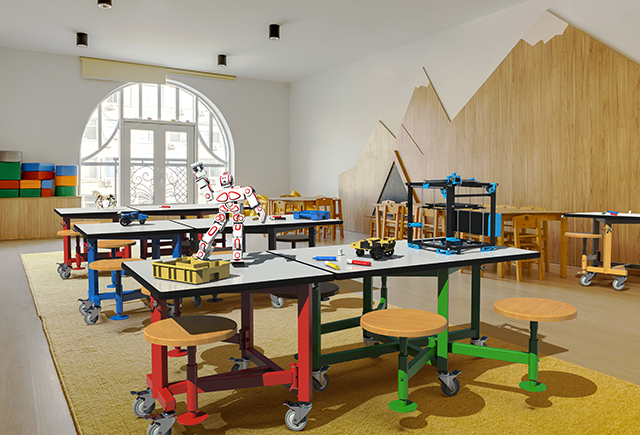
Another customizable feature unique to makerspaces is moveable furniture. Unlike most classrooms that service a single teacher or subject area, makerspaces are traditionally used as a communal resource open to everyone. While this is a testament to the utility of makerspaces and STEM/STEAM learning in general, it also means that the space needs to be adaptable to a variety of ages, subjects and project types. Installing mobile furniture allows educators and students to quickly and easily transform the space into what they need without taking time away from learning.
Functional
Schools implementing a makerspace want to be sure they do it right. No one wants to spend the money for a 3D printer and have it sit unused in a classroom. Bringing in expert help can be the key to ensuring the investment has the support it needs for long-term success.
One area where experienced professionals can improve a school’s maker program is with ongoing staff training. For example, PHabLAB will aim to train at least a dozen school staff members from a variety of different subjects on how to use the machines in the makerspace. After the initial training, PHabLAB remains a resource for schools to use in ensuring the longevity of the maker programs. Training for teachers is always available if more staff is interested in using the space or there is significant turnover within the school. This ensures that there are no gaps between knowledgeable instructors who can take advantage of the makerspace.
Another resource PHabLAB provides to help schools build their program is a library of projects. These activities range in subjects and difficulty, and each project comes with a list of necessary materials and instructions. Teachers can incorporate these into their existing curriculum as they become comfortable with the space and its machines.
Both of these offerings combine with the years of design experience to create not only a space, but a program that schools can be proud of.
Sustainable
A makerspace is a considerable investment, and school administrations need to be confident that they will be usable for a long time. As with all Palmer Hamilton products, the furniture delivered by PHabLAB is highly durable for safe and long-lasting use.
In addition to the physical space, the value the programs themselves provide to students makes them highly sustainable as well. There is a lot of demand for skilled workers in the job market, and these makerspaces introduce students to important technology they could use to build a future career. Many schools have opted for 3D printers or CNC machines because students can become certified in their use, an excellent addition to any resume. In the short term, there are also a lot of students who do not respond well to traditional lecture-based instruction and can become disengaged from learning and their peers. Makerspaces offer another opportunity for those students to find something they can excel in at school, so they are excited to come to class every day.
Essentially, the cornerstones of a quality makerspace are the same as the projects made within them. Does it fit the needs of the application? Is it made with a solid foundation and the right materials? And, will it be around for as long as it needs to be? Answering yes to all these questions is critical to ensuring your makerspace makes the grade.
K-12 Is Complicated. We Can Help.
Over the past two years I have worked with Zink Foodservice as a regional account manager, advising non-commercial food service operations on front and back of house acquisitions. In that time, I have partnered with Palmer Hamilton on several accounts as a trusted vendor that my K-12 clients can rely on for elevated spaces and high-quality furniture.
Before I moved into my current position, I was a K-12 food service director for many years. This role allowed me to gain a unique understanding of the people I now call clients. I know what they value in a business partner, and I can identify and appreciate vendors like Palmer Hamilton that make the extra effort to meet these unique needs in the K-12 market:
Food Service Directors Have a Lot on Their Plate
When I worked in a school district, I had 20 buildings to manage and oversaw a total of eight remodels. The day-to-day operations of managing staff, planning menus, working out budgets and other tasks combined with these larger projects to improve my spaces was a lot to handle.
My experience is not unique, and there are countless food service directors in K-12 who are currently managing a similar workload. They don’t have much room left in their schedule for anything else. With the high demands of the role in mind, the best approach to sales in K-12 is more of a partnership than a pitch. Directors should be able to find relief in handing over part of their long list of responsibilities to a trusted advisor, knowing they will receive insightful, application-specific recommendations without any agenda outside of providing what’s best for the school.
Funding Is a Tough Nut to Crack
Another time-consuming aspect of the food service director’s job is the lengthy approval process required for any larger acquisitions. Purchases over a certain dollar amount are required by the United States Department of Agriculture (USDA) to follow various rules and go through several steps before they can come to fruition.
Understandably, this red tape can discourage food service directors from pursuing bigger projects, even if they want to take them on. Any advisor who works with schools on these larger scale endeavors needs to know how to navigate and assist in the complexities of funding and be able to further lessen the burden on the director.
There Are Many Mouths to Feed
Food service directors are constantly working to please several different bosses. There are the district administration and regulation from the USDA, but many other parties also have a lot of influence on school nutrition.
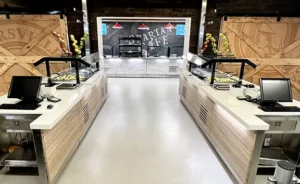
Unlike other departments within a school, food service’s budget comes directly from its income. In other words, the more kids who are eating meals at school, the higher the budget. This makes convincing students to eat the food provided by the school critical to maintaining and growing the program. Appealing to students requires a multi-faceted approach, with many schools updating the menus to include more “build-it-yourself” options and culinary diversity, as well as working to make the physical space more modern and inviting.
Staff working under a director also have a lot of influence, especially in today’s market. Keeping cafeteria workers happy in their roles has always been a priority for food service directors. However, this has become even more important as finding and retaining cafeteria workers has been a challenge since the beginning of the pandemic.
With all these stakeholders who need to be catered to in different ways, working with a company that understands each group is critical.
The Secret Ingredient
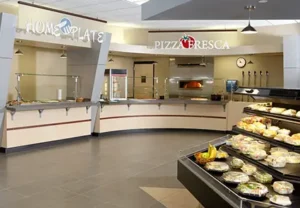
School food service directors care a lot about their programs and their communities, and they want to work with people who feel the same way. Understanding this truth has led Zink to hire employees and choose vendors, like Palmer Hamilton, that reflect that mentality by putting the needs of the school first.
Palmer Hamilton has proven time and time again to understand the industry and regulations, lessen the burden with a full-service business model and cohesively incorporate all stakeholder opinions into each design. We are proud to work with the Palmer Hamilton team and will continue to recommend them, confident that they will help schools elevate their food service spaces and programs.

An Installation Resource in Your Back Pocket
Hiring a third-party company to work with a school on a furniture installation is kind of like hiring a babysitter to watch your kids. They will do the job well enough in the short-term simple situations, but they don’t have the same knowledge and insight as the parents for more complicated decision making. Instead, Palmer Hamilton takes a hands-on strategy to “product parenting” by offering a full-service approach from the project intake through completion.
Recently, Palmer Hamilton has begun incorporating a factory-direct installation program where someone from our team goes to the school to install the products instead of an outside vendor. Bringing this part of the process back to Palmer Hamilton has already proven to be huge in increasing safety, return on investment and ease of doing business for customers.
Safety
Safety is the number one concern for every new product we develop, and we are meticulous about creating an installation process that eradicates as much risk as possible. Factory-direct installation is another step towards ensuring that the process is followed to the letter and keeping the staff and students who use our products safe.
The initial focus of this new program has largely been our more intricate products, like the wall pocket tables. These products have a lot of moving pieces and extra steps required during the installation, which present more room for error and potential injuries if not done correctly.
An outside company will have instructions on how to install the tables, but they will not have the in-depth product knowledge the manufacturers possess that allows them to understand why they need to be installed that way. Not only will a Palmer Hamilton employee have a better grasp on the initial process, but they can also offer best management practices to help the school avoid injury in the future.
Return on Investment
In addition to protecting the people, this installation method helps preserve the product. Many wall pocket tables have been in schools for decades, and while some may look their age, others are still in pristine condition. The difference is how the tables have been treated over time.
While Palmer Hamilton employees are on-site, they can share tips on how to keep the tables in top condition with the school’s unique environment in mind. This comes from the wealth of knowledge and experience built up by working with these products every day. School staff would have no way of knowing this information, and outside installers don’t know the product well enough to offer it to them. Installers from Palmer Hamilton bring in that additional resource to help increase the lifespan of these products and preserve their integrity for years to come.
Ease of Doing Business
Another element that factory-direct installation has shown to improve is the customer experience. Whether the school or Palmer Hamilton is the one hiring and coordinating with an outside installer, this increases the logistical legwork required to get anything accomplished. Two schedules are always better than three when trying to set up an appointment.
Streamlining the number of people on a job also simplifies who to contact for any needs going forward. If there is a warranty issue shortly after the installation, the customer would normally have to try and figure out who to reach out to, the manufacturer or the installer, so they can remedy the situation. With factory-direct installation, Palmer Hamilton is both, and the question of who to contact is easily answered.
We’ve already seen these benefits play out and heard about the positive impact of factory-direct installation from schools. Now, all that’s left is to grow the program to include more products and a larger geographic area to help more of our customers do even more with their space.
The Impact of Furniture in University Spaces
Establishing Logistics and Looks to Elevate Cafeterias
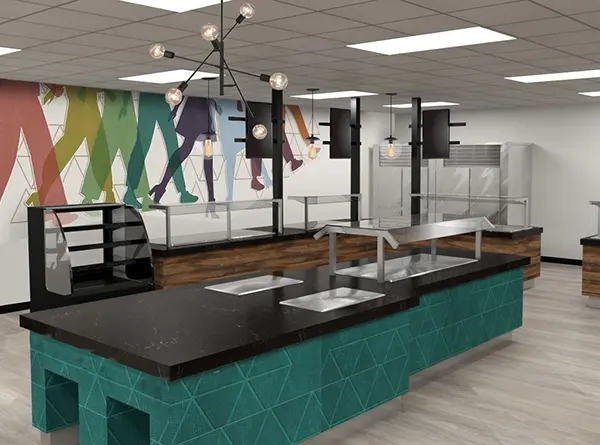
Working with PHDesign gives us the unique and rewarding opportunity to elevate cafeteria spaces from unremarkable “before” pictures into incredible “after” pictures that represent a school’s culture and vision. This transformation requires collaboration from multiple parties, especially in the beginning when we need input about both the functional needs and desired aesthetic. Over the years, we have been able to streamline this input process into a two-step system that captures all the information we need to do more with your space™.
Step 1: Logistics
The first set of questions we ask are all about the furniture. Those answers give us the essential details we need to create the room layout before we can move on to the decor and feel of the space.
To start off, we need to establish the desired seating capacity. For many schools, increasing the population that a cafeteria can support to cut down on lunch periods or sustain growing student populations is the reason they were looking for an upgrade in the first place. Even if a school is trying to maintain or decrease seating capacity, designers still need to understand how many meal periods there are and how many people use the space per meal period before making any decisions on the layout.
The size of the room plays into this as well. Fitting more tables and chairs into a smaller space may limit the available furniture selection that will fit the school’s needs, so the room’s parameters need to be measured as one of the initial steps.
After determining how big the area is and how many people need to fit into it, the next questions to ask are all about the interaction with the space. The traffic flow during a lunch period has a big effect on where furniture can be placed. Major passages need to be kept clear to avoid bottlenecking students, while areas with fewer people passing by can offer space for additional seating, condiment stations, waste receptacles and other important pieces. Cafeterias also need to be wheelchair-accessible throughout the service line and in the seating area. To be ADA-compliant, 5 percent of the tables or seating areas need to be accessible, but schools with a higher demographic of students in wheelchairs should incorporate more.
Interaction with the space outside of the lunch hour can be important as well. Often, cafeterias serve multiple purposes in addition to food service, including common areas, community rooms, auditoriums and gyms, and the furniture in these situations should be mobile and easily stored for quick cleaning and rearranging to fit those needs.
Step 2: Looks
Unlike the logistics input, which tends to follow roughly the same set of questions for every cafeteria, the looks phase of our initial intake has a bit more variety. Some schools come in with a clear idea of exactly what they want in the space, either from seeing another Palmer Hamilton cafeteria or ideas they came up with before bringing us in. In these cases, we will have a discussion to get on the same page, confirm what they want by showing some examples, then get to work on the design book.
Other schools may not have as clear of an idea about what they want the space to look like, and we are always prepared and happy to help. We’ll start by giving the key decision makers a book full of previous examples that they can flip through to identify elements they like. This also allows them to indicate which elements they don’t like, which is equally useful for our design input.
In addition to whether a school comes in with a design direction in mind or not, the age group of the students can also have an impact on the questions we ask during this part of the process. Generally speaking, the biggest choice for an elementary school cafeteria aesthetic is whether to make it more playful or sophisticated, while a middle or high school is usually more concerned with how much emphasis is put on school colors and the mascot in the design elements. We will use a combination of our own samples and well-known establishments (e.g. “Do you want to be more like Panera Bread or Chuck E. Cheese?”) to determine where a school is on these spectrums and truly understand the targeted aesthetic.
For years, this process has allowed us to understand our directives more efficiently, seamlessly incorporate input from multiple stakeholders and ultimately deliver cafeterias that school communities are excited to use. Contact us today to put our award-winning design and turn-key solutions to work for you.
Our Tables Have Great Legs to Stand On
Safety
The first and most uncompromisable priority in a Palmer Hamilton table design is safety. Designing safe products for K-12 comes with some unique challenges, as the tables are often moved and treated rougher than other environments while their primary users, children, are more accident-prone than adults and therefore more susceptible to injury.
In response to these risk factors, all Palmer Hamilton tables come with several safety features to protect both the products and the people who use them. Palmer Hamilton tables aren’t just nice to look at; they’re built to last. We offer industry-leading durability with a 15-year warranty to give schools confidence in their investments’ longevity.
To protect the students and staff who interact with our products, we follow table construction guidelines and certain safety tests that have been cemented as industry standards. However, we also incorporate our own experience in K-12 to identify potential risks and add additional safety features. This includes locking mechanisms to ensure tables are stabilized during use and storage, outriggers to allow them to be moved and stored safely and inherent features to prevent pinch points.
Functionality
Defining the function(s) is the first step we take when coming up with a new product. Developing a novel table model is always exciting, but doing so without first identifying a corresponding need is essentially a waste of time.
In addition to understanding the market to find that need, companies have
to understand themselves and their offerings. There may be a new, in-demand function that can be fulfilled with a few small tweaks to an existing model. Self-awareness in this kind of situation allows companies to streamline the engineering process to expand their capabilities efficiently.
After identifying what the function is for a new table, designers need to anticipate how it will be used. People are increasingly placing value in ease of use for most products, and that rings true for K-12 furniture. Any necessary setup, takedown or movement to achieve the desired function should be easily done without complicated instructions.
Efficiency
The final critical priority in developing a new table is efficiency. Adding a new product means more work to the production line, which makes simple assembly processes critical to the operation’s sustainability. Efficiency on the floor can also be achieved by consolidating existing products. In 2023, the
Palmer Hamilton team reviewed our line of mobile cafeteria tables with an assessment of how the offerings fulfilled different functions. We found that the number of complex assemblies could be reduced by 50 percent while still covering all the needs schools may have. This reduction eliminated redundancies in the catalog and streamlined the production process to be more economical.
As Palmer Hamilton continues to grow, we anticipate continued challenges in maintaining efficiency and new opportunities to find innovative solutions. For now, our priority is investing in our people, as they are the foundation of our current and future success. We are also exploring new technologies and automation that can elevate our operation even further. The future looks bright, and we are excited to continue developing tables that help schools do more with their space.
School Nutrition Association National Conference
July 12 – 14 • Charlotte, NC
Known as the School Nutrition Event of the Year, the School Nutrition Association’s Annual National Conference (ANC) unites thousands of school nutrition program operators, industry partners, and allied organizations for an unparalleled educational and networking experience every July.

A Year in Review
As 2023 draws to a close, Palmer Hamilton extends heartfelt gratitude for an outstanding year. Our dedicated team played a pivotal role in making this year the most successful to date, contributing to various noteworthy accomplishments:
- Attainment of record-breaking sales for the third consecutive year
- Recognition as one of the top five fastest-growing private companies in Southeastern Wisconsin
- Strategic investment of over $3 million in manufacturing operations, resulting in heightened efficiencies and enhanced product quality
- Fourth consecutive year with zero lost-time accidents, showcasing our unwavering commitment to safety
- Successful introduction of Esports Space Designs tailored for K-12 schools
- Strategic expansion of product offerings within the Nook, Mobile Cafeteria Tables and Wall Pocket Systems lines
- Implementation of new Warranty and Case Management, resulting in a notable reduction of over 50% in service case closure times
- Streamlined installation scheduling through the introduction of Advanced Shipping Notices
- Improved quote turnaround time, averaging under 24 hours
- Consistent recognition through the receipt of numerous project design awards on a school- district-wide scale
Above all, we cherish both the work we engage in and the individuals we serve. Looking forward, Palmer Hamilton anticipates a bright future, marked by ongoing investments in operational efficiency and ease of business, coupled with the continued expansion of our product lines in 2024. We wish you a joyous holiday season, and stay tuned for what promises to be another exciting year!
Palmer Hamilton Earns Top Five Ranking
Furniture Solutions Provider Palmer Hamilton Earns Top Five Ranking as Part of Future 50 Recognition
K-12 solutions manufacturer lauded as one of the fastest growing companies in the Milwaukee area
Palmer Hamilton, a full-service provider of turnkey furniture solutions for cafeterias and maker spaces, has been recognized by a leading business publication as one of the “Fastest Five” growing companies in southeastern Wisconsin.
Palmer Hamilton’s business model helps schools “do more with their space” by elevating cafeterias and other common areas to reflect the character of the community. Every Palmer Hamilton project is unique and designed with input from key stakeholders, including students, staff and faculty. Much of the growth Palmer Hamilton has seen recently can be attributed to investments made to improve the customer experience. This includes upgrading customer and resource planning software systems, adding interactive tools for easier design input and increasing manufacturing capabilities.
This recognition comes through the Future 50 awards program, established in 1988 by BizTimes Media, a Milwaukee-based business media company. The goal of Future 50 is to recognize and celebrate local companies that have objectively grown the most throughout the previous year. To qualify, companies must be privately owned and in business for at least three years, demonstrating significant growth in both revenue and employment. The five companies exhibiting the most growth receive a special distinction as one of the “Fastest Five.”
A celebration for the success of all 50 companies was held Thursday, Sept. 22. Representatives from the Fastest Five companies, including Palmer Hamilton CEO and President John Gardner, spoke in a panel discussion focused on the keys to achieving growth, biggest challenges to overcome and why the company benefits from working out of Wisconsin.
This year’s class of Future 50 winners have added almost 2,000 jobs to the Milwaukee area over the past three years and grown the economy with $1.7 billion in annual revenue.
“We are honored to be among such good company as a Future 50 and Fastest Five recipient,” says Gardner. “Our commitment to our community is one of the foundations of Palmer Hamilton, and we look forward to bringing in more jobs and revenue to the Milwaukee area for years to come.”
The BizTimes article about the Fastest Five panel at the event can be found here: www.biztimes.com/these-are-the-5-fastest-growing-privately-held-companies-in-southeastern-wisconsin/.
How Palmer Hamilton Puts Our Knowledge to Work for You
After so much time working in K-12 schools, we have learned a great deal more than English, math and science. Doing business with a school district is unique from most other partnerships, and being able to navigate that successfully requires in-depth knowledge and a well-rounded approach focused on school-specific ease of business.
A Basic Education on Education
Timing is important in any project, regardless of the industry. However, the window for completing a project within a school makes timing even more critical. The budget year in education typically begins on July 1, which tends to be 6-8 weeks before the start of classes. This usually results in planning done throughout the school year for any larger projects to be completed in the following summer before the next fiscal year. With such little time available, businesses working with schools need to be efficient with responsive quotes, easy-to-place orders and a full understanding of the timing required for development and installation to not interfere with school operations.
Each cafeteria project Palmer Hamilton has worked on over the years is unique, but we’ve been able to separate most of them into three major categories to help us budget our time properly.
- The school wants to replace old tables. This tends to be a simple discussion with the school decision makers and does not involve much added design work.
- The school wants to convert a space into a multipurpose community room. These projects are more complicated, with different types of furniture and design elements to complement the multievent space.
- The school wants to completely upgrade the cafeteria. A project like this involves collaboration with several stakeholder groups and a considerable amount of time planning, designing and installing.
Making the Grade
To ensure the best flow of business for these and any other styles of project, Palmer Hamilton has invested significantly into business process improvements across our operation.
A major enhancement comes from reinvesting over $5 million into our manufacturing capabilities. We were able to add high-tech equipment that allows us to insource much of what we were previously outsourcing, simplifying the process and reducing lead times.
In addition, we integrated our enterprise resource planning (ERP) system with our customer relations management (CRM) system. Not only does this make digital project components less complicated, it also allows for full transparency with customers who can track their order and easily communicate with us about its status. The CRM system has also been upgraded to include case management for any issues or questions customers may have during the project or after it’s installed. As a result of this new software, the number of cases that are open and the average time it takes to close them has decreased by 50% in only eight months.
Customer interactions have also been made easier with our new Quick Pick form. This tool gives schools access to a selection of our most popular products and colors to build an initial design concept. Our team can then take that concept as a jumping off point, streamlining the process of obtaining customer input for designs and quotes. The next evolution for this resource is to enable images to be moved or rotated and add more color options and interactive features for our customers.
These changes have had a major impact on the ease of doing business with Palmer Hamilton, and we’re just getting started. We refuse to rest on our laurels and remain committed to delivering industry-leading products with industry-leading customer service.
Invest Your COVID Relief and Impact Your Cafeteria
School decision makers do not often find themselves in a position with a budget surplus, but this is the current situation for many schools thanks to pandemic relief funding.
With the upcoming deadlines to spend this money, many schools are looking for meaningful ways to invest in the education experience for students, faculty and staff. There are several valuable ways that funding can be used to achieve this, and schools across the country have found one of them to be upgrading their cafeterias.
Student Experience
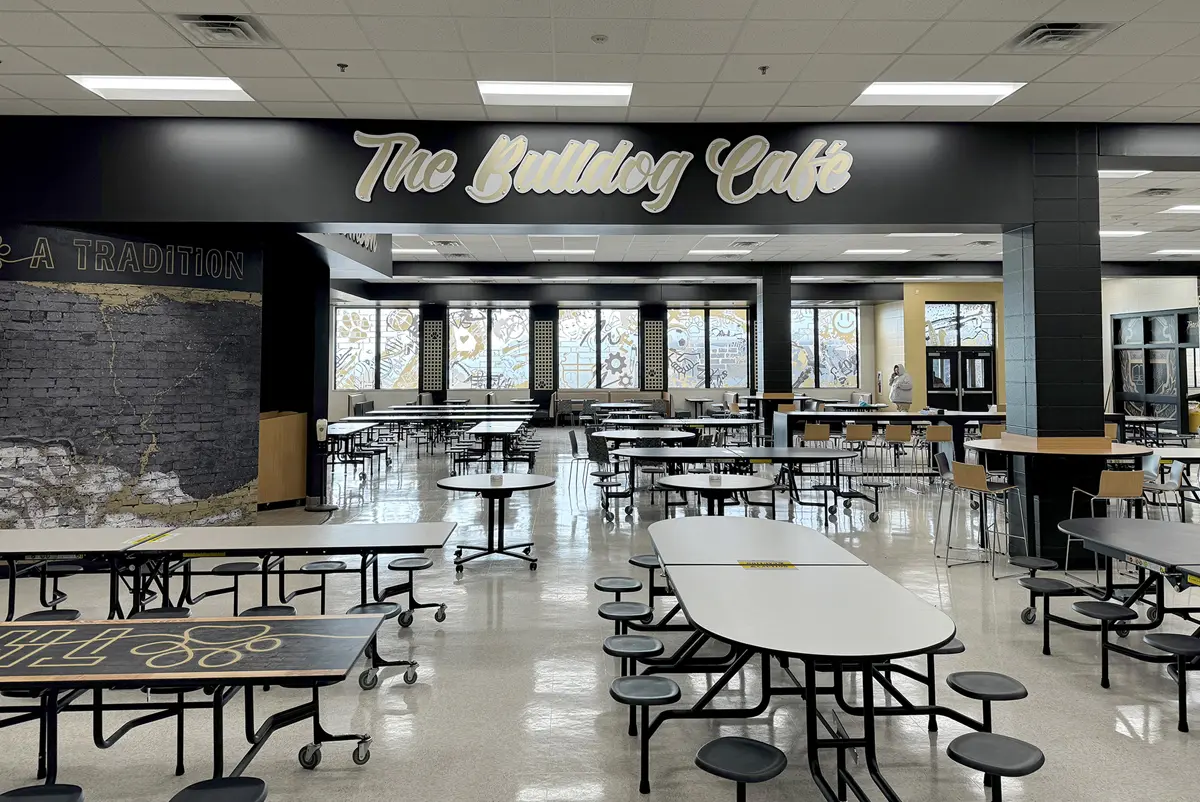
Enhancing your cafeteria does more than just bring in new furniture and decorations, it allows you to create a space that encourages student participation and engagement. Though traditional cafeterias are highly functional, we have found that offering students different seating styles and creating more of a restaurant feel with the design achieves that same usability and elevates the experience within the space.
A student from a high school that used its relief funding to redo the cafeteria commented on how the project impacted them, saying, “I love this cafeteria. It’s so different than what it used to be, and it makes me want to eat breakfast and lunch here more often.”
Much of this excitement comes from input given by the students themselves. Palmer Hamilton encourages schools to involve student representatives in focus groups during the design process, giving them a voice in how their community and their peers are represented. This can include activities, slogans, design motifs, table layouts and other aspects of the final elevated space.
Return on Investment
Because food service is generally one of the only options schools have to generate income, school districts that renovate cafeterias are investing in a source of revenue.
After working with Palmer Hamilton, a high school in Georgia saw participation increase by 12% every month compared to the previous year, and a school in Florida achieved a full return on its investment into a full cafeteria redo within just 75 days from increased participation. These schools and others like them continue to see more returns from higher student participation during meals, giving them the resources for more projects to continue enhancing a student’s experience in nutrition and beyond.
Future Impact
Without the consistent room in the budget to update the look of your cafeteria, getting it right the first time is important. Palmer Hamilton prides itself on durability with both the design and craftsmanship of its products.
Palmer Hamilton designers are intentional with how they choose design motifs. While each project should have a modern look, the designers try to avoid imagery and themes that are overly trendy. Sticking with a more timeless look allows schools to continue enjoying the space for years to come without it falling out of style.
Investing in higher quality furniture also diminishes or even eliminates the frequency of costly and inconvenient replacements. Palmer Hamilton projects from years ago still look brand new thanks to the workmanship on the products themselves. This level of quality can also be applied to mobile or flexible furniture solutions, allowing schools to reposition, reconfigure or even remove furniture for safe, efficient traffic flow and multiple layouts within a single space.
There may not be many opportunities for schools to invest in themselves like this, so talk to a Palmer Hamilton representative today to take advantage of extra funding and do more with your space™.