Palmer Hamilton Launches Design Service for Esports Spaces in K-12 Schools
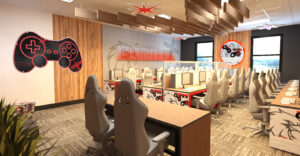
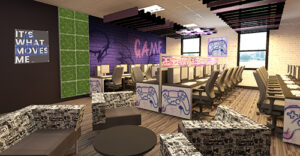
Palmer Hamilton, a full-service provider of turnkey furniture and design solutions specializing in K-12, has added esports spaces as an offering for schools featuring gaming chairs and desks designed by RESPAWN, a manufacturer of furniture designed for gaming.

Esports, or competitive video gaming, has had a growing presence as a team sport at the professional, college and now middle and high school levels. Esports’ popularity can be attributed to its appeal to a population of students who are not drawn to traditional extracurricular activities.

“We have found in our work with RESPAWN that most of the students who join an esports team do not participate in any other team activities,” says Palmer Hamilton CEO John Gardner. “Not only does an esports space allow these kids to find a community within the school, but the encouragement and development of an official program can help many of them find lifelong careers in the gaming industry.”

By incorporating the multiple lines of gaming chairs and desks offered by RESPAWN, Palmer Hamilton designers can expand their offerings to accommodate the growing demand for esports programs and spaces in K-12. Spaces incorporating new esports products and design services can be independent or incorporated into a new or existing STEM/STEAM lab.

Schools working with Palmer Hamilton on these and any other spaces are encouraged to involve key stakeholders, including faculty, staff and students, in the design of the project to create a space that reflects the unique character of the community. In addition to the new esports capabilities, Palmer Hamilton designers can work with schools to enhance cafeterias, media centers, STEM/STEAM labs and other common areas.

See our Esports Environments section for more information.


Making Room for Esports in Schools

At Palmer Hamilton, we strive to provide quality furniture and décor solutions that help K-12 schools do more with their space. Our true mission, however, is to deliver environments that encourage collaboration and give every student a place where they feel welcomed and supported.

This mission was the driving factor in developing Palmer Hamilton’s new partnership with RESPAWN, a supplier of high-quality furniture for esports. The esports industry has grown exponentially over the past few decades, and its influence has had an impact on K-12 schools with many schools adding video games as learning tools in curriculum and offering competitive esports teams as an extracurricular opportunity for students. As this presence continues to grow, having a dedicated space for esports can ensure that a new demographic of students finds a home within the school and resources they can use to find future success in a growing industry

Inclusion for Today


A 2019 survey taken by the Aspen Institute for Project Play, a non-profit that works to develop healthy communities through sports, found that in 2018 only 38 percent of kids ages 6 to 12 played a team sport on a regular basis with the average child quitting sports entirely by age 11.1 Esports players see even lower participation rates in sports. Through its work with the Wisconsin High School Esports Association (WIHSEA), RESPAWN has found that 80 percent or more of the members in most esports programs do not participate in another team activity.

For the majority of these kids, esports are a chance to reap the social, mental and emotional health benefits of being on a team that they would not traditionally find. According to Health.gov, these benefits can include lower rates of anxiety and depression, higher cognitive function and even a reduced risk of suicide.2 This makes driving participation and supporting those who are already involved in esports an important responsibility for school administrations.

Getting students excited about esports starts with creating the right environment. A basketball program would not thrive if the playing space consisted of an outdoor, concrete court with a portable hoop. Players want a proper court with team colors on the walls, equipment they are excited to use every day and school pride exhibited throughout the space.

Esports is the same.

Many students who would be interested in joining an esports team likely already have a setup at home. Schools that develop an esports space with companies like Palmer Hamilton and RESPAWN offer replicated or even elevated performance spaces to invite student participation. School imagery can also be incorporated throughout the space to foster the pride and belonging that come with participating in an organized team activity for kids who may not always see themselves as representatives of their school’s spirit.

As schools embark on developing an esports space, Palmer Hamilton encourages them to consult with all stakeholders, including the students who will use it. Not only does this help them take further ownership of the space, but it also offers an opportunity for input from people who may want to get involved but are hesitant due to lack of representation. This is especially pertinent for young women. Though esports has become more even in the gender makeup, the population is still largely male dominated. Inviting women and students from other non-majority demographics to make their mark on the space from the beginning helps give everyone who wants to participate a welcoming environment.

Careers for Tomorrow

In many cases, the activities that kids participate in during their days in K-12 are much more than fun ways to pass the time. Thousands of former high school athletes are now playing professionally, coaching or finding other ways to turn their passion into a lifelong career.

An interest in esports opens the door to more career opportunities than almost any other school activity. Market Watch reported in 2021 that the video games industry grew to surpass the combined market share of both film and North American sports, and the jobs in this massive enterprise are both numerous and lucrative.3 Having the resources and support for students can help them find and build careers they are passionate about.

Esports spaces can also be part of a larger effort to encourage students in STEM/STEAM fields. Having a full room dedicated to esports in the school would be ideal but may not be viable with budget and space constraints. Instead, schools can work with brands that specialize in STEM/STEAM, such as PHabLab, to create multi-purpose spaces for both experiential learning and extracurricular activities. Either way, this makes participation in a variety of potential fields of learning, new extracurriculars and eventual career paths much more attractive and attainable for every student.


1: Survey: Kids quit most sports by age 11 – Project Play

2: Benefits of Youth Sports (health.gov)

3: Videogames are a bigger industry than movies and North American sports combined, thanks to the pandemic – MarketWatch

Education Goes Both Ways

Richard Hein, Director of Marketing – Palmer Hamilton

No one knows an industry better than those who are in it every day, and we are lucky to work directly with some of the most experienced and well-versed professionals in education. Throughout our decades as a full-service furniture manufacturer, Palmer Hamilton has built up our own wealth of knowledge entirely thanks to these relationships with schools and dealers. For our part, we hope to provide the same value back to them as a trusted partner, and this two-way exchange of expertise is the cornerstone of our business model.

You Learn Something New Every Day

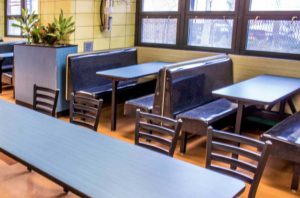
Cafeterias are the biggest rooms in a school with uses beyond the single purpose of feeding students

Our ongoing relationships with important industry contacts are crucial to keeping us up to date on the latest trends. Over time, we’ve learned the importance of flexibility in a space, especially in smaller schools. Cafeterias are one of the biggest rooms in a school, and many administrations feel they should have uses beyond the single purpose of feeding students. The right furniture and design can make the room multifunctional for meetings, community events and other purposes, extending the value that the room provides to the school. STEM/STEAM and esports spaces are seeing a similar trend, with many schools looking to combine multiple educational media into one space. This design style started in university settings but has since gained traction in high schools with an emphasis on multidisciplinary education.

Individual accounts also offer important insight on a more personal level. Each job is unique, and there are nuances to the community and the space that will influence the final design. Our designers take the time to meet with multiple stakeholders, including students, teachers, custodians, facility managers and IT. This approach ensures that every question is answered, input is gathered and the designers have a complete picture of what they’re working with.

School for Schools

Our field guide was developed to catch the details that can be missed.

Developing an effective method for getting the information we need involves a lot of learning from our past. We have always been thorough, but small details can slip through the cracks when not enough detail is given. Small details like outlets and planned upgrades can seem unimportant in the initial intake, but they can have an impact on the final design. Our design team is adaptable enough to navigate these forgotten factors when they pop up down the road, and they also ensure they never happen again. This leads to new questions for the stakeholders in future accounts to avoid facing the same obstacles going forward.

Ultimately, Palmer Hamilton is looking to solve a school’s problems, not create more. Schools in the market for a major cafeteria upgrade are generally looking for a solution for an objective. In many cases that’s driving up student participation or making a space more flexible, but we’ve encountered and assisted with many other goals as well. Understanding the “why” helps our designers be the best possible resource to help schools bring their vision to life.

Palmer Hamilton would not be successful today without the continued input from the schools and dealers we work with. We hope that they learn as much from us as we do from them and that they value the quality of our expertise as much as the quality of our products.

How Palmer Hamilton Puts Our Knowledge to Work for You
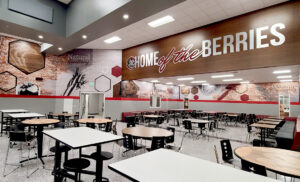
After so much time working in K-12 schools, we have learned a great deal more than English, math and science. Doing business with a school district is unique from most other partnerships, and being able to navigate that successfully requires in-depth knowledge and a well-rounded approach focused on school-specific ease of business.

A Basic Education on Education

Timing is important in any project, regardless of the industry. However, the window for completing a project within a school makes timing even more critical. The budget year in education typically begins on July 1, which tends to be 6-8 weeks before the start of classes. This usually results in planning done throughout the school year for any larger projects to be completed in the following summer before the next fiscal year. With such little time available, businesses working with schools need to be efficient with responsive quotes, easy-to-place orders and a full understanding of the timing required for development and installation to not interfere with school operations.

Each cafeteria project Palmer Hamilton has worked on over the years is unique, but we’ve been able to separate most of them into three major categories to help us budget our time properly.

  1. The school wants to replace old tables. This tends to be a simple discussion with the school decision makers and does not involve much added design work.
  2. The school wants to convert a space into a multipurpose community room. These projects are more complicated, with different types of furniture and design elements to complement the multievent space.
  3. The school wants to completely upgrade the cafeteria. A project like this involves collaboration with several stakeholder groups and a considerable amount of time planning, designing and installing.


Making the Grade

To ensure the best flow of business for these and any other styles of project, Palmer Hamilton has invested significantly into business process improvements across our operation.

A major enhancement comes from reinvesting over $5 million into our manufacturing capabilities. We were able to add high-tech equipment that allows us to insource much of what we were previously outsourcing, simplifying the process and reducing lead times.

In addition, we integrated our enterprise resource planning (ERP) system with our customer relations management (CRM) system. Not only does this make digital project components less complicated, it also allows for full transparency with customers who can track their order and easily communicate with us about its status. The CRM system has also been upgraded to include case management for any issues or questions customers may have during the project or after it’s installed. As a result of this new software, the number of cases that are open and the average time it takes to close them has decreased by 50% in only eight months.

Customer interactions have also been made easier with our new Quick Pick form. This tool gives schools access to a selection of our most popular products and colors to build an initial design concept. Our team can then take that concept as a jumping off point, streamlining the process of obtaining customer input for designs and quotes. The next evolution for this resource is to enable images to be moved or rotated and add more color options and interactive features for our customers.

These changes have had a major impact on the ease of doing business with Palmer Hamilton, and we’re just getting started. We refuse to rest on our laurels and remain committed to delivering industry-leading products with industry-leading customer service.


Palmer Hamilton Designs Cafeterias with Taste
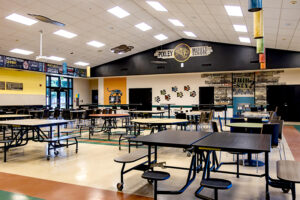
Is your school cafeteria providing the student experience you want?

When it comes to educational environments, Palmer Hamilton is here to help you to do more with your space™. Our experienced, accredited interior design experts are collaborative, easy to work with, and eager to bring tangible results to your school through a proven process, innovative design, and durable furnishings.

If you’re looking to transform your school lunchroom into a sleek, modern food court that students will be excited to use, our PHDesign Team is ready to help you create dynamic, flexible environments that engage students.

PHDesigners Collaborate and Communicate

Palmer Hamilton prioritizes collaboration and communication with all key stakeholders-students, teachers, school administrators and school boards, and even community members. We also work with any third-party collaborators as well.

We offer a variety of design options to fit exactly what you’re looking for in your project. Our processes begin with project intake-a comprehensive analysis of your existing space beginning with measurements and considering the electric, plumbing, and technological needs required for the overall design and plan. Our conversations with you also include gathering information around objectives, milestones, and of course budget.

Using these assessments, our PHDesigners work closely with your team to ensure all essential elements of your new space we’re looking to create are accounted for. This part of the process is highly collaborative to allow PHDesigners to fully understand the vision. Our designers use immersive, personal insight so the space can best represent school pride, account for accessibility needs, and more. If you are undertaking a new build, our PHDesigners support the architects to bring your vision to life.

Following these conversations, PHDesigners produce renderings and 3D room perspectives to ensure we have fully met your expectations with details down to the exact color you picked for your chairs. With your approval, the process for ordering and installation begins.

Your Fruits, Our Labor

Transforming a school lunchroom brings a vast array of benefits. A reimagined cafeteria or a refreshed food court can become a source of school pride and community with a design that encourages students to come to school and engage with one another in these sleek, modern environments.

When a food court becomes a social hub, it boosts belonging and identity. Instead of a place to eat lunch, it becomes a spot to share a meal with friends and peers, and a source of excitement for students. Streamlined, optimized lunch lines provide a better student experience with a more controlled environment for school nutrition staff and faculty.

One of the most tangible benefits a cafeteria transformation delivers for school administrators and school boards is an exceptional ROI. New food courts, on average, increase overall participation in school lunch program participation by 15%. Engaging students with nutritious meals allows for better learning outcomes.

Results You Will Feel

One of the most rewarding elements of cafeteria transformations is seeing how they benefit everyone-not just the students using the spaces, but the faculty and staff, and families as well.

PHDesigners visited Pixley Middle School in California in June to help them do more with their cafeteria space. This new installation offers markedly different lighting, color, and flow. With incorporated school colors and logos, the space feels alive with tables of varying shapes and sizes.

Morehouse Elementary in Louisiana and Connersville Middle School in Indiana enjoy their transformed spaces. PHDesigners create spaces that reflect the unique interests of students by incorporating insights from the people who know them best: the school faculty and staff.

Looking to transform your school cafeteria? Reach out to Palmer Hamilton, and we’ll help you do more with your space™.


Cafeteria design DOES make a difference
Makerspaces, STEM or STEAM labs, Fab Labs, and other “Project Based Learning” environments have been sought after by school districts as they build or update their facilities as they seek to bring more STEM opportunities to their students.

In designing these spaces to be efficient learning environments, we focus on flexibility of layout and furniture, appropriate equipment selections in the proper student usage ratios, and a safe working environment.

Hawaii

Sales Representatives

Ty Maras
CRO – Palmer Hamilton LLC
tmaras@palmerhamilton.com
1.800.788.1028 ex. 903
Or see Teri Wilson-Ruggles

Teri Wilson-Ruggles
Director of PHDesign
truggles@palmerhamilton.com
1.920.517.7809
Or see Ty Maras

Customer Experience Representative

Aimee Duchemin 
aduchemin@palmerhamilton.com
1.262.274.4916